

National research programme Marine genomes (PEPR ATLASea)
Deciphering marine genomes to preserve and innovate
Through the ATLASea research programme, France is embarking on an unprecedented exploration of its marine biodiversity by sequencing the genomes of thousands of species living in the maritime areas under its sovereignty. Its aim is to build an unprecedented knowledge base for studying evolution, biological mechanisms and interactions between species, while supporting biodiversity protection strategies.
|
This programme draws on expertise in biology, ecology, genomics, bioinformatics and taxonomy. Thanks to technological advances in sequencing, it is now possible to explore in detail the genetic characteristics of a large number of species, many of which remain little known or have never been studied at this level. This genetic exploration will make it possible to trace the evolution of marine organisms, elucidate their adaptation mechanisms and shed light on the links between different forms of life. The data collected will be shared in open access, constituting a unique resource for global research in biology and ecology.
There are many potential applications: identifying natural molecules with therapeutic properties, new metabolic pathways useful for health, agri-food or pollution control, and discovering enzymes capable of degrading synthetic polymers or withstanding extreme conditions. By promoting a better understanding of marine ecosystems, ATLASea will contribute to the development of innovative strategies for the preservation and management of populations of species of interest – exploited, threatened or invasive – that are essential to the balance of the planet and the well-being of human societies.
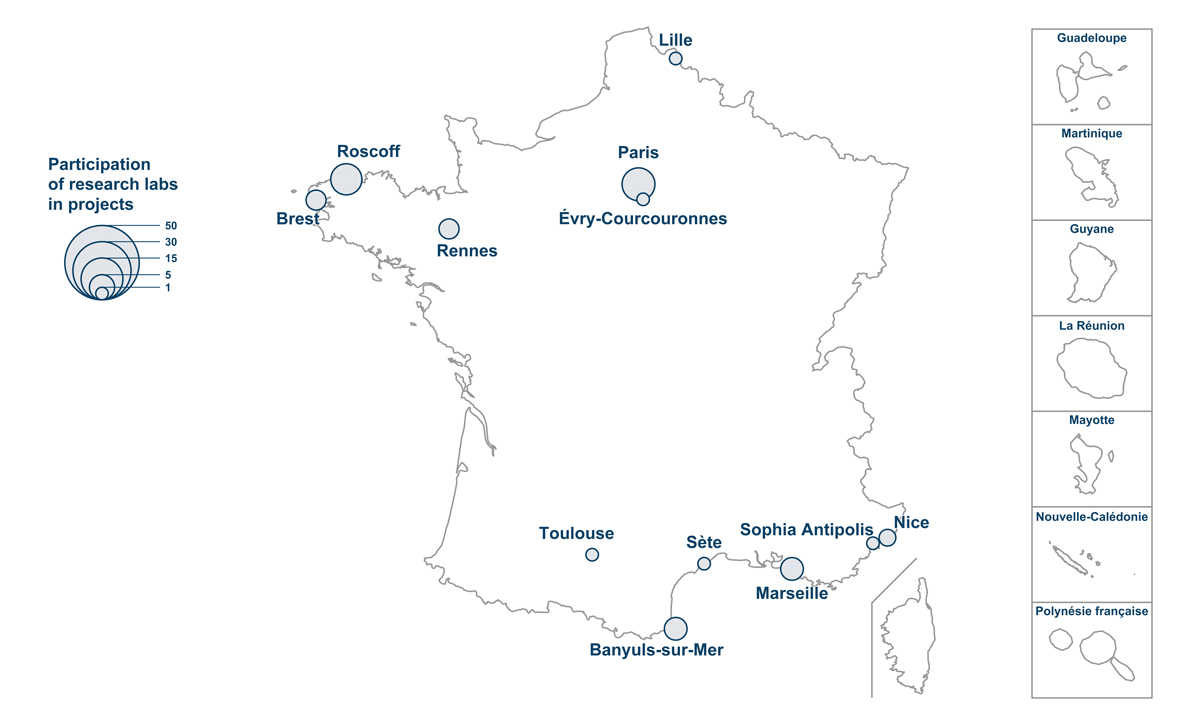
ATLASea research programme: an atlas of marine genomes
Audiodescription
The ATLASea programme will decipher and exploit this colossal wealth of information from marine species on the French coast. It will guarantee the interoperability and security of the data, and facilitate its dissemination and use in accordance with the FAIR and Open Science principles. Funded by a €41.3 million grant over 8 years as part of France 2030, the programme will help to understand, study and preserve a broad diversity of marine life forms.
For more information
- Unlocking the secrets of marine genomes, article in CNRS News (10/10/2023)
-
France 2030: French government invests €41 million in a large-scale research programme to unlock the secrets of marine genomes, communiqué de presse à l'occasion de l'inauguration du PEPR (12/01/2023)