
Lost page of the Archimedes Palimpsest identified in Blois, central France
Society
| • A page from the Archimedes Palimpsest, considered lost for several decades, has been identified by a CNRS researcher at the Musée des Beaux-Arts in Blois. • The leaf contains a passage from the treatise On the Sphere and the Cylinder on one side, which remains legible, while the other side is obscured by an illumination added in the twentieth century. • This discovery paves the way for further analyses aimed at improving the reading of the ancient text. |
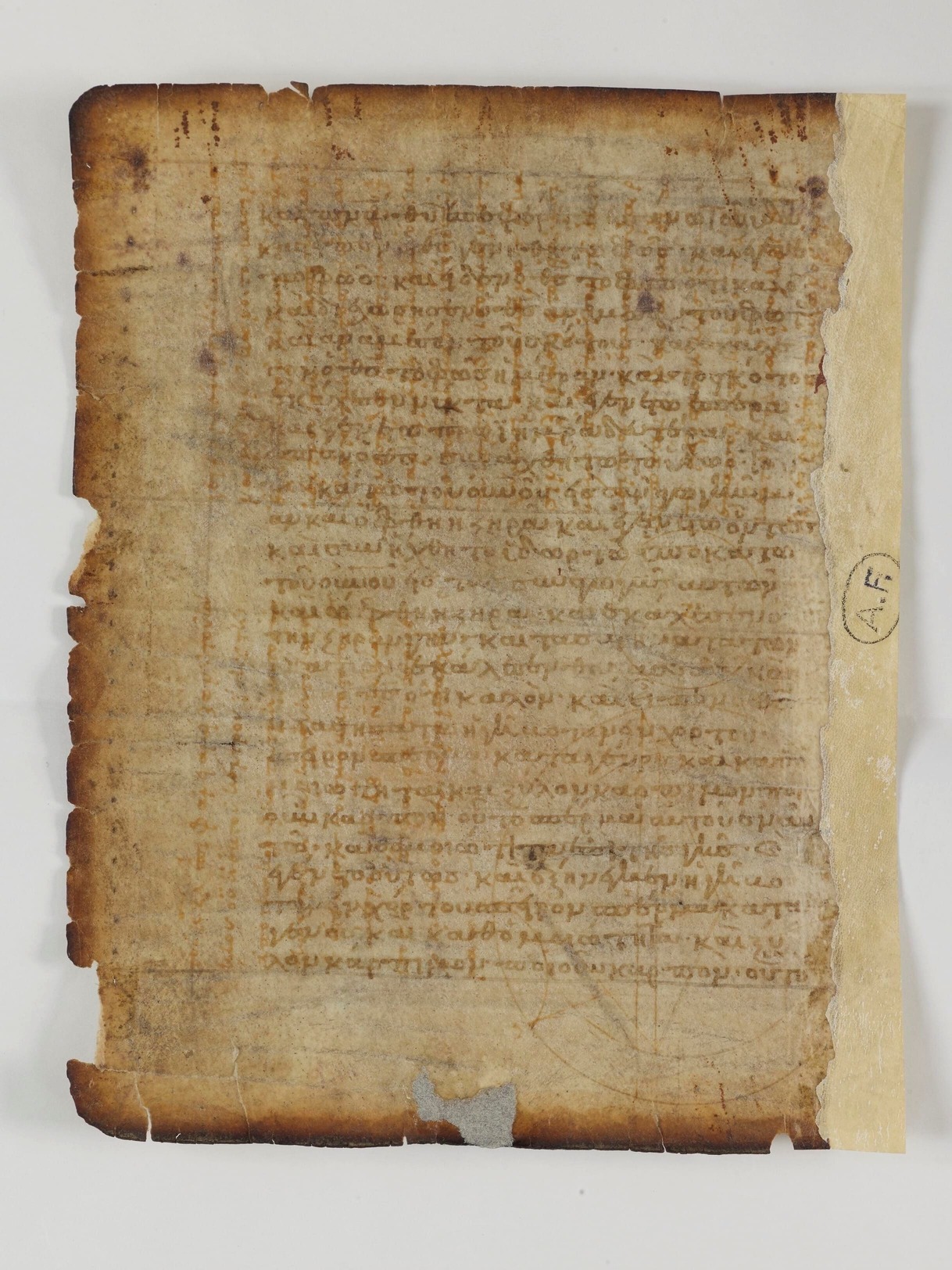
A page long believed to have been lost from the Archimedes Palimpsest, one of the most important surviving manuscripts of antiquity, has been identified at the Musée des Beaux-Arts in Blois, central France, by a CNRS researcher. Initial analysis confirms that the page corresponds to page 123 of the Palimpsest and contains a passage from Archimedes’ treatise « On the Sphere and the Cylinder », Book I, Propositions 39 to 41. The discovery is presented in an article published on 6 March 2026 in Zeitschrift für Papyrologie und Epigraphik.
The Archimedes Palimpsest is a tenth-century Greek manuscript containing several treatises by Archimedes of Syracuse, part of which was erased in the Middle Ages in order to reuse the parchment for other writings1 . This practice of recycling was common at the time for such animal-skin writing materials, which were extremely costly. Successively preserved in Jerusalem and then in Constantinople2 , the manuscript was documented through photographs at the instigation of Johan Ludvig Heiberg in 1906 before entering a private collection in France, and before the French Ministry of Culture authorised, in 1996, its export and sale at auction to a private collector, its current owner.
Now housed at the Walters Art Museum in Baltimore, United States, the Archimedes Palimpsest was for a long time accessible to scholars only through the photographs taken in 1906 by Johan Ludvig Heiberg. In the early 2000s, multispectral imaging3 made it possible to reveal major texts by Archimedes as well as previously unknown fragments of ancient literary and philosophical works. However, the manuscript changed hands several times before reaching its current owner. As a result, three leaves documented in these photographs disappeared and have since been considered lost.
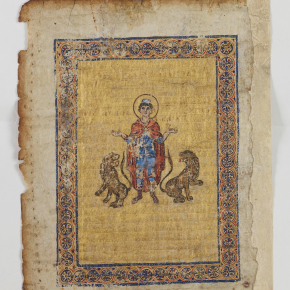
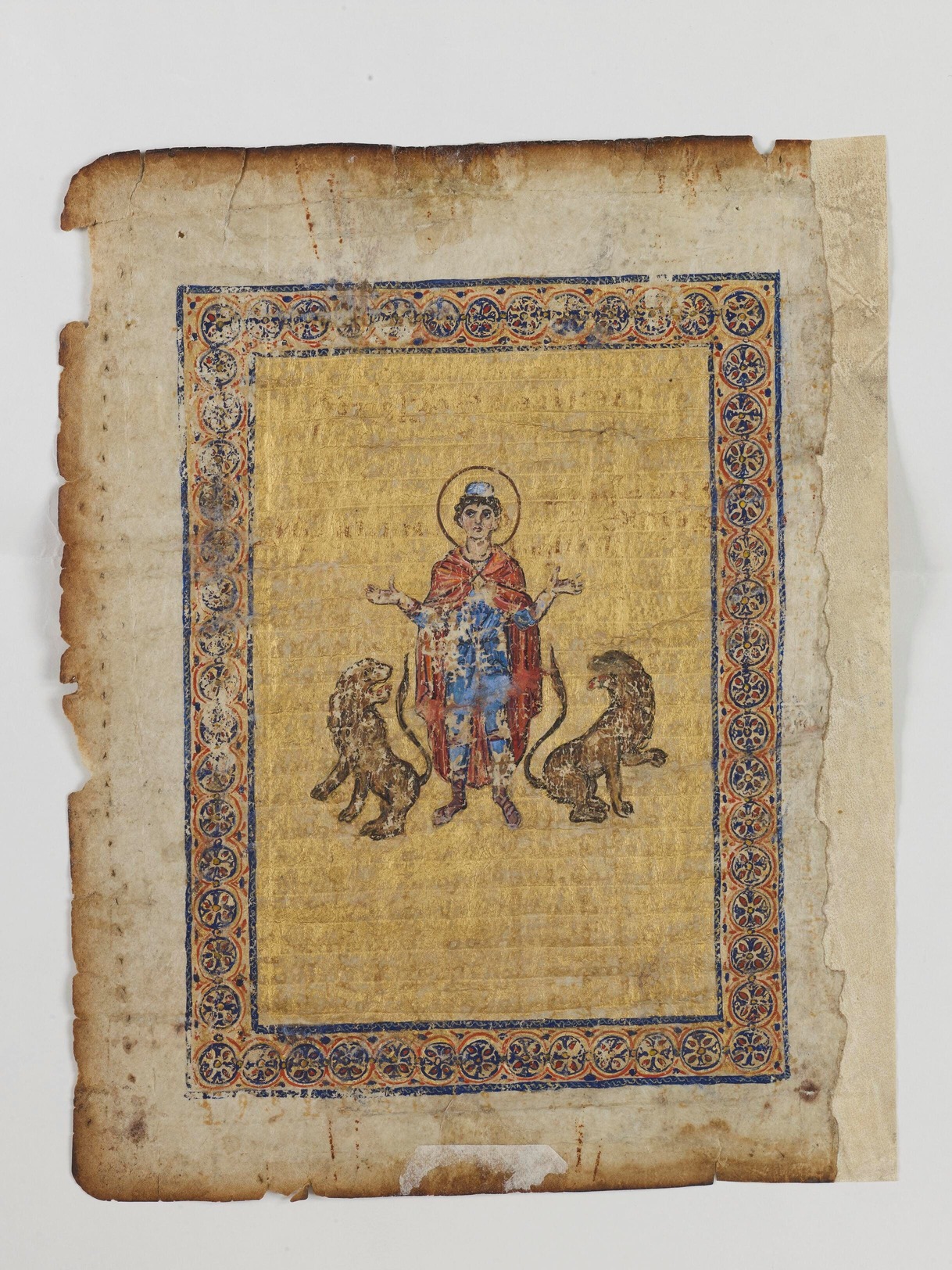
The leaf identified in Blois by Victor Gysembergh, a CNRS researcher at the Centre Léon Robin for Research on Ancient Thought (CNRS/Sorbonne University), was among these missing pages: comparison with Heiberg’s photographs, now preserved at the Royal Danish Library, made it possible to confirm without ambiguity that it was leaf number 123. On one of its two sides, a text of prayers partially covers geometric diagrams and a passage from the treatise “On the Sphere and the Cylinder”, Book I, Propositions 39 to 41, much of which remains largely legible. The other side is covered by an illumination added in the twentieth century4 , depicting the Prophet Daniel5 surrounded by two lions, beneath which the ancient text remains to this day inaccessible using conventional methods of examination.
Subject to the necessary authorisations, the researcher plans to conduct the first imaging campaigns within a year, using a multispectral approach combined with a series of synchrotron-based X-ray fluorescence analyses in an attempt to reveal the text concealed beneath the illumination.
This discovery sparks renewed interest in re-examining the complete Archimedes Palimpsest using more powerful techniques than those employed in the early 2000s, with a view to undertaking a new reading of the pages that remained illegible during the initial campaign.
- 1Religious writings, as well as political or philosophical speeches and texts by various authors.
- 2The former name of the present-day city of Istanbul (Turkey).
- 3An analytical method that involves illuminating and photographing a page of an ancient manuscript under different wavelengths of light, without physically coming into contact with the document, in order to reveal inks, writings, or details that have become invisible to the naked eye.
- 4This illustration was reportedly added around 1942 by the manuscript’s owner, who is thought to have attempted to increase its market value.
- 5A figure from the Hebrew Bible (Tanakh) and the Old Testament.
Bibliography
A leaf from the Archimedes palimpsest rediscovered in Blois. Victor Gysembergh. Zeitschrift für Papyrologie und Epigraphik, 6 March 2026.