Are CNRS sites havens for biodiversity?
At the end of May, the CNRS launched a pilot initiative at its Gif-sur-Yvette campus for the organisation’s ‘biodiversity observatory of CNRS sites’ project. The plan is for the scheme to be rolled out across the whole of France to identify the animal and plant species on CNRS sites so these can then be protected more effectively.
The meadow brown butterfly, the bird’s-foot trefoil, Nathusius’ pipistrelle… What do these (winged, leafy and furry) species have in common? All of them inhabit at least one CNRS site in mainland France. Now, France’s leading research organisation is launching its innovative Biodiversity Observatory of CNRS sites initiative to enhance our understanding of the flora and fauna on CNRS campuses.
This initiative is part of the CNRS’s biodiversity plan, which itself is integrated into the organisation’s Overall Sustainable Development and Social Responsibility Plan. An initial evaluation of the biodiversity footprint of CNRS activities highlighted the direct impact of land use on the flora and fauna of CNRS, even though this footprint mainly stems from purchasing. In this context, the new biodiversity observatory aims to catalogue the species that live on a number of CNRS sites and then assess the consequences of the organisation’s activities.
The first stage of this observatory is the Gif-sur-Yvette campus in France’s Essonne region. For 80 years, the CNRS has owned an 80-hectare estate (half of which is forest) on this site near the Upper Chevreuse Valley Regional Nature Park. “In the aftermath of the Second World War, French scientists wanted to give science the right setting to support the country’s recovery, and that was the Gif estate”, recalls Carole Le Contel, deputy regional officer and environmental transition officer at the CNRS Île-de-France Gif-sur-Yvette Regional Office. “Since then, the CNRS has always conserved this land”.
Gif, a haven of biodiversity
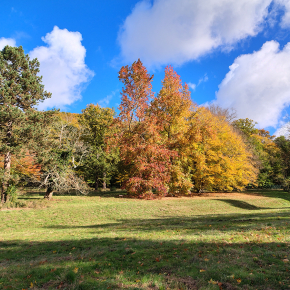
This was illustrated as early as 1969 when Michel Dumont, then a glassblower in the logistics department, set up a nature club at the Regional Office. The club expressly stated its aim of “preserving our jewel of biodiversity – the CNRS park”, explains the club’s current leader, Valérie Besson, who works as a campaign coordinator in the Regional Office’s human resources department. Valérie joined the club in 1991 and thus has seen the group’s activities diversify over the past thirty-five years. The club was initially founded by birdwatchers then subsequently expanded its focus to the campus’s rich botanical heritage and, more particularly, its hundred or so remarkable trees. There are sequoias, ginkgos, Atlas cedars and even a three-hundred-year-old Spanish plane tree near the château, all of which were catalogued in 1974 by France’s National Museum of Natural History (MNHN). They were also the subject of conservation work by members of the nature club. “In 2002, this work1 led to the classification of 31 hectares of the estate as a natural area of ecological, faunistic and floristic interest”, explains the club’s leader proudly.
- 1This work resulted in a brochure, ‘Le domaine de Gif, un patrimoine naturel à protéger’ (The Gif estate, a natural heritage to be protected), three editions of which were published between 1995 and 2002.

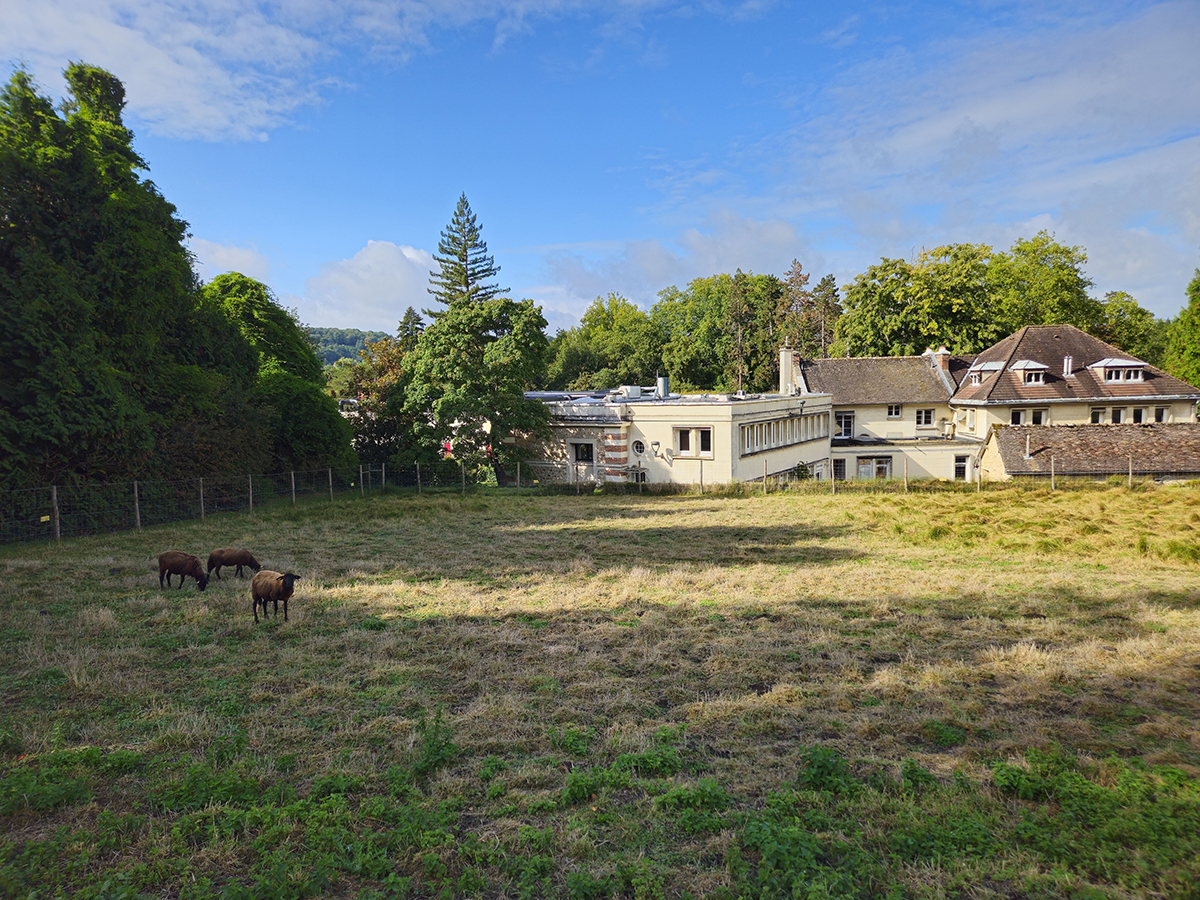
In fact, for several years now, the site has been committed to an environmental transition programme that balances biodiversity conservation with quality of life at work in this exceptional setting. This includes the differentiated management of green spaces, eco-grazing or recycling plant waste to produce mulch. All of this work led to the site being awarded the EcoJardin label in 2025 and now leads Carole Le Contel to conclude that “given the comprehensive work we’ve been doing on biodiversity for years, as soon as I heard about the launch of pilot sites, I wanted the Gif campus to be part of it”.
The biodiversity observatory’s approach was inspired by citizen science and, in practical terms, aims to contribute to two national databases supported by the VigieNature programme – Propage for butterflies and Florilèges for urban meadow flora. The Gif campus also contributes to the Vigi-Chiro protocol on bats. “These databases were chosen because they cover a wide range of pressures on biodiversity at our sites”, explains Séverin Baron, the deputy head of the CNRS’s environmental transition unit1 . Séverin Baron goes on to list these pressures: disturbance and trampling, plant protection products, pressure on biological corridors, climate change and the mowing of grasslands. In practice, two to three volunteer staff members on each site will carry out this local monitoring with support from a coordinator.
- 1This unit is part of the CNRS’s Transversal Steering Support Mission (MTAP).
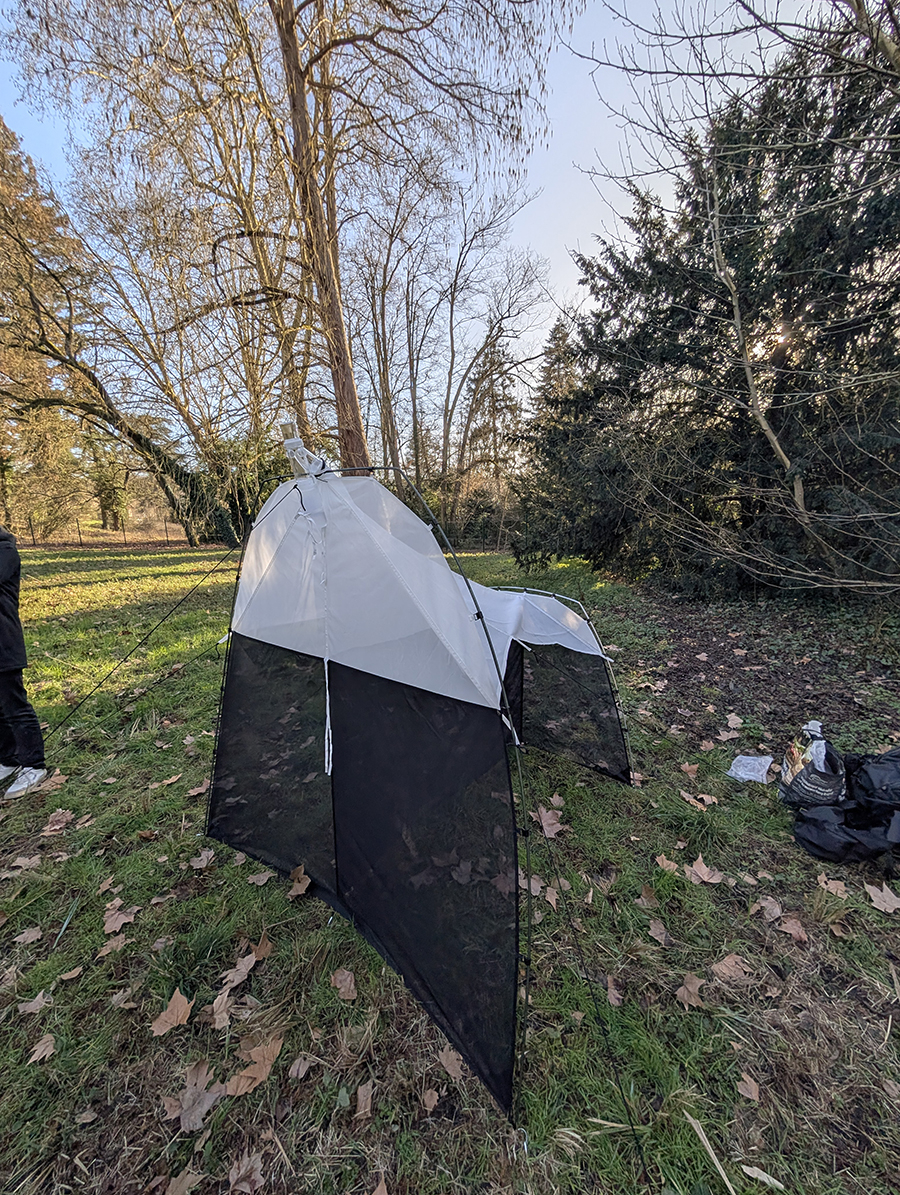
As well as these common elements shared by all future observatories, the Gif campus has a unique feature, namely the Malaise trap which was named after its inventor, the entomologist René Malaise. This device uses a vertical net to capture large numbers of flying insects (mainly flies, midges and mosquitoes, but also wasps, moths, bugs or beetles) by intercepting them before collection in a bottle of ethanol for twice-weekly checks. Their DNA is analysed in a laboratory using metabarcoding, which involves extracting DNA from all the insects in a vial and simultaneously sequencing all the DNA barcodes to identify them. “In just one year, a Malaise trap can detect several thousand insect species on a site like Gif”, explains Rodolphe Rougerie, an MNHN academic who works at the Systematics, Evolution, Biodiversity Institute (Isyeb)1 and coordinates the project at Gif. “In this way, it contributes to the general inventory of a community to find out more about and measure insect diversity in temperate regions. And, in doing so, it measures the human impacts on this”.
The observatories are proliferating
All these protocols provide details on using the right levers for reducing such impacts. Sandrine Ceresiani, a property project officer with the Regional Office and the coordinator of the Gif campus observatory, explains that “the aim is to map biodiversity on campus and then use this as a decision-making tool for managing green spaces to maximise biodiversity”. Beyond biodiversity, inventories of this kind facilitate the identification of nature-based solutions that benefit humans and flora and fauna alike and Séverin Baron argues that “the renaturation of campuses also makes them more resilient to environmental risks like heatwaves, floods, and so on”. This is known as a ‘co-benefit’ insofar as protecting biodiversity also provides an opportunity to adapt a site to climate change and thus preserve working conditions there.
The ideas of the pilot observatory in Gif are already beginning to proliferate. In terms of research, the Gif’s Malaise trap is contributing to the “operational testing of this system alongside about twenty others currently across France”, explains Rodolphe Rougerie, the joint-director of the Dynabiod PEPR2 . He believes “some of the volunteer CNRS sites could integrate the national insect inventory and monitoring work” that this PEPR will lead with support from the Climate, Biodiversity, Sustainable Societies programme agency whose coordination has been entrusted to the CNRS.
- 1CNRS / EPHE – PSL / MNHN / Sorbonne University.
- 2Priority Research Programmes and Facilities (PEPR) aim to establish or consolidate French leadership in scientific fields that are linked to a technological, economic, societal, health or environmental transformation and viewed as a priority at national or European level.
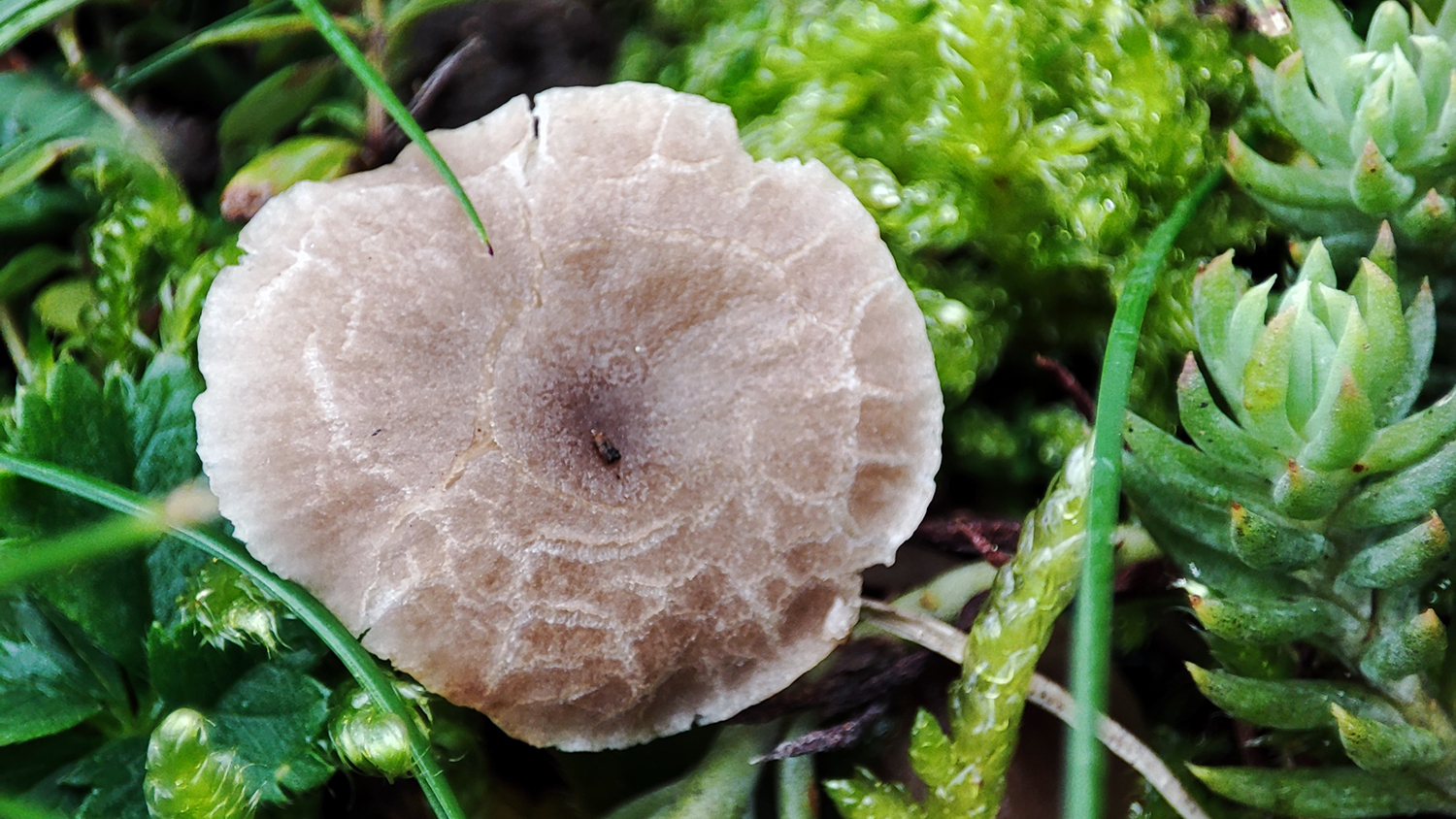
Indeed, other campuses have expressed their interest in being part of the initiative. In particular, for several years now, Orléans has been engaged in an eco-responsible approach that is similar to Gif’s to preserve the campus’s 72-hectare green space. The wealth of its biodiversity was illustrated recently when naturalists there identified a species of fungus (Dermoloma) for the first time in France. An initial inventory has already been carried out and “the next step will be to preserve what has been identified and even promote it”, explains Marion Blin, the deputy regional officer and sustainable development officer for the Centre Limousin Poitou Charente Regional Office. “That’s why we also wanted to position ourselves as a pilot site for the biodiversity observatories that the CNRS is rolling out. We plan to launch these various participatory inventories from 2027 onwards”.
Séverin Baron is delighted by the enthusiasm for initiatives of this kind, although they are still in their infancy. “The biodiversity observatory of CNRS sites is at the interface between research and institutional policy. That’s exactly the point of it”.