

The CNRS is working on driving the development of agroecology in the French West Indies
Researchers in the field of agroecology are working to tackle major challenges in the French West Indies like increasing food self-sufficiency, reducing food costs, combating the loss of biodiversity and enhancing the health of local residents. The CNRS is drawing on its ability to bring together different stakeholders to support the development of this research.
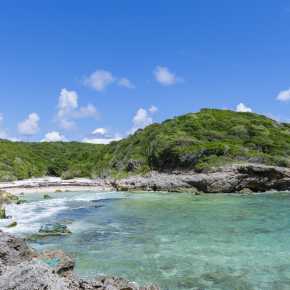
Paradoxically, although Guadeloupe and Martinique are in the Caribbean, one of the 34 global biodiversity ‘hotspots’, these countries import over 80% of their food1 . The incredible diversity of fruit there ranges from guava to pineapple and star fruit, along with the many species of yam and cassava but these rarely make it onto local people’s tables. Two major export crops still dominate in these two French Overseas Departments and Regions, namely sugarcane and bananas. In Guadeloupe, these crops account for 38% of the Utilised Agricultural Area (UAA) while, in Martinique, bananas alone account for a quarter of the UAA.
Conversely, agroecology promotes more diversified farms and local varieties like those found in Creole gardens, which draw on Amerindian, African and European knowledge. This type of agriculture aims to address environmental and social challenges more effectively, providing many benefits in the view of its advocates. “Agroecology has positive effects on biodiversity, helps maintain genetic diversity and preserves soil life,” explains Pascal Jean Lopez, director of the Littoral Caraïbes Human-Environment Observatory (OHM)2 , a Guadeloupe-based CNRS structure that promotes interdisciplinarity and dialogue with local stakeholders. The whole idea is to combat the loss of biodiversity in Guadeloupe, which, for example, is home to 15% of endangered animal species.
Bringing together “all stakeholders”
Agroecology could also help drive “greater food sovereignty and better public health”, adds the researcher, particularly as “diet-related diseases like cardiovascular disease are twice as prevalent in Guadeloupe as in mainland France”. The risk factors include the consumption of imported and processed foods as food is also 15% more expensive in Martinique than in mainland France, according to France's National Institute of Statistics and Economic Studies. Shifting to more local production would also reduce the cost of food for the population of Guadeloupe.
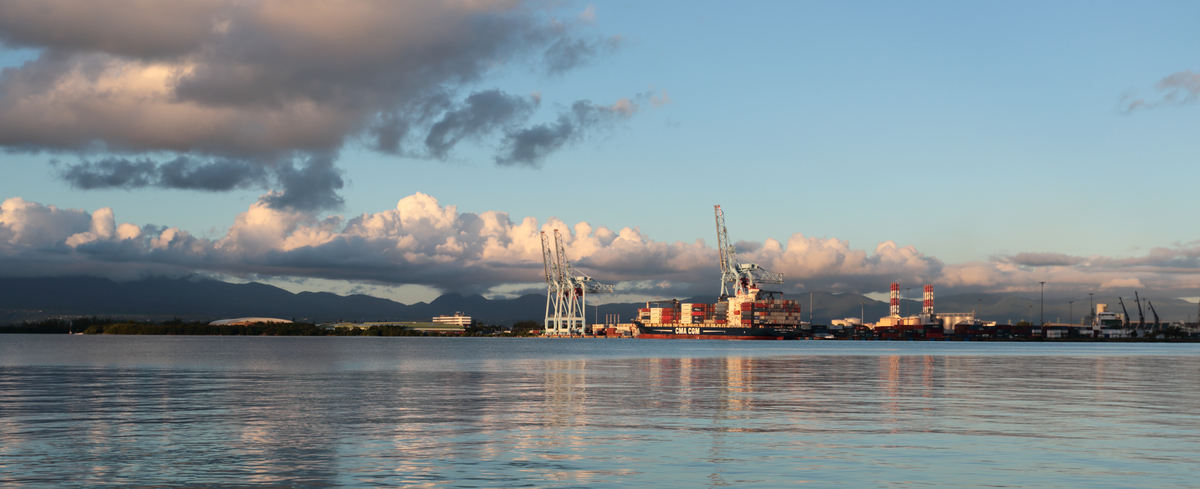
The public authorities are encouraging this agricultural transition but “steering it is difficult”, continues the director of the OHM. “The food system is very complex with a lot of parameters to take into account, like the constraints on food producers, choices as regards attributing subsidies, sales systems, industrial and port-related issues, urbanisation, difficulties in accessing land, and so on.” The CNRS is supporting this initiative as “our strength derives from our systemic approach and the OHM engages with all stakeholders to understand the Caribbean food system in its full complexity.”
When biodiversity becomes profitable
To bring those very stakeholders together, in spring last year the CNRS organised the Ecology, Environment and Biodiversity Week (SEEB) in Guadeloupe. This annual event is held in France and other countries on the theme of 'Agroecology, the food system and biodiversity'. “Major agri-food groups, like Carrefour, attended along with less visible stakeholders, including small-scale farmers,” remarks Pascal Jean Lopez. The next edition will focus on the issue of land restoration, a topic requiring the study agricultural production methods which perfectly dovetails with CNRS strengths like interdisciplinary and jointly developed local research. “As scientists, we aim to identify local initiatives that have the potential to bring about transformative change,” enthuses the OHM's director.
This approach has also been adopted in the framework of the ‘Interdisciplinary Incubator of the French Antilles’ (PIAF) joint call for proposals launched by the University of the French Antilles (UA) and the CNRS. This led to the funding of four projects launched in 2024, with one carried out in partnership with the UA to assess the potential for the economic exploitation of soil biodiversity in the French Antilles. This two-year project is supported by a structured consortium with robust local roots. The CNRS heads the Climate, Biodiversity and Sustainable Societies' research programming agency and has long been involved in biodiversity conservation, aiming to show how this could form the core of a value chain providing goods and services.
Science as a watchdog for healthy food
The CNRS also draws on its international network to monitor health issues considered central to the development of agroecology. Five CNRS OHMs, in Guadeloupe, French Guiana, Portugal, Senegal and Canada, have helped make food a major research topic through the ‘Food Systems Under Influence' project. Researchers working on this project study changes in food systems and their links to health and the environment, including the detection of certain pollutants. The Littoral Caraïbes OHM in Guadeloupe has studied the links between urban and port development and changes in food patterns from an anthropological standpoint and to aims “to facilitate work on health-related issues,” as Pascal Jean Lopez puts it.
This is crucial because the French West Indies are increasingly faced with the consequences of the use of chlordecone, a chemical classed as a carcinogen and endocrine disruptor by the relevant health authorities. Chlordecone was used between 1972 and 1993 to combat the banana weevil and still affects crop choices in certain soils identified as contamination risks. This major issue has to be taken into account to achieve a more diversified, agroecological food production system - one of the challenges being addressed by the Outre-merPriority Research Programme (PPR) led by the IRD in collaboration with the CNRS and CIRAD which studies pollution in the French Overseas Departments and Territories. One of its projects, ‘éCoSéa’, is developing sustainable solutions for the health of socio-ecosystems in the context of agricultural pollution in the French West Indies. “Research is a core element of the Chlordecone IV Plan as all of work carried out can help inform management measures,” explains Edwige Duclay, the project director coordinating the Chlordecone IV Plan under the supervisory authority of the French Ministries of Health and Overseas Territories. One of the recently-launched flagship projects is a study into the acceptability of measures under consideration by public authorities, which is the objective of the sociological project 'Living with Chlordecone' (LiCOCO) launched by the CNRS in 2023. Many issues are linked to the development of agroecology, including health, the economy, biodiversity and so on. The CNRS works to bolster interdisciplinarity and dialogue between stakeholders to support the field's development more effectively which in turn drives the adoption of a nuanced, comprehensive and constructive approach.
- 1The food dependency rate in France's overseas territories, as measured by the French Environment and Energy Management Agency (ADEME) in May 2022.
- 2Observatoire Homme-Milieu (OHM) in French. A research initiative created by the CNRS and dedicated to the study of highly anthropised and artificialised ecosystems.