

Preparing France’s regions for the climate of tomorrow
In the face of climate change, regional adaptation is a slow, collective and often uncertain process. Working alongside local authorities, the scientific community generates knowledge, informs decision-making and supports the development of responses rooted in local realities.
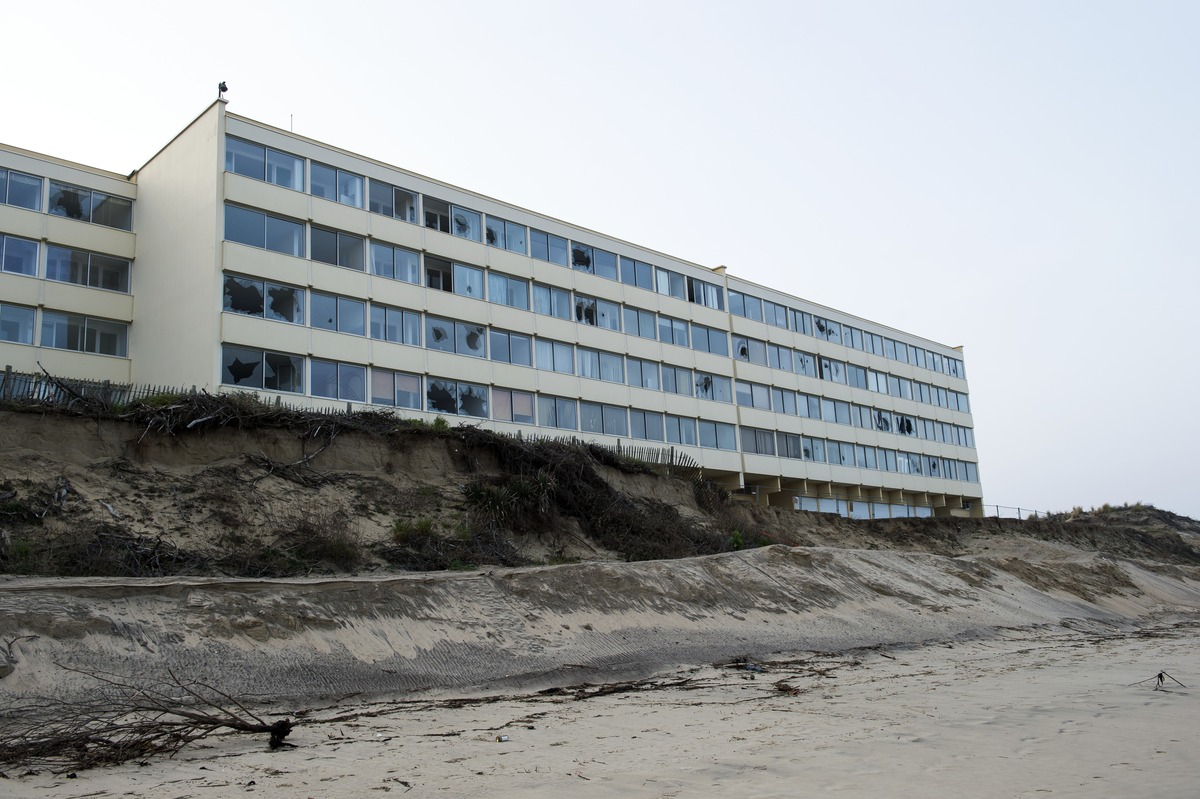
Heatwaves, floods, wildfires, coastal erosion… The effects of climate change are appearing in different ways, from one region to another. France is now faced with a potential average temperature rise of +4°C by the end of this century, and the third French National Climate Change Adaptation Plan (PNACC3) underlines the importance of anticipating these changes and adapting French regions according to their own specific vulnerabilities. Research teams are working ever more closely with local authorities to help understand these risks, develop the right responses and persuade local stakeholders to take action, in some cases.
Understanding before acting
Greening is often considered an obvious response to the multiplication of heatwaves, but is it really the most suitable solution for all areas? For, while the climate does influence the city, the reverse is also the case. The density and extent of built-up areas, the materials used, the presence of water and even the topography all modify energy exchanges with the atmosphere and shape urban microclimates.
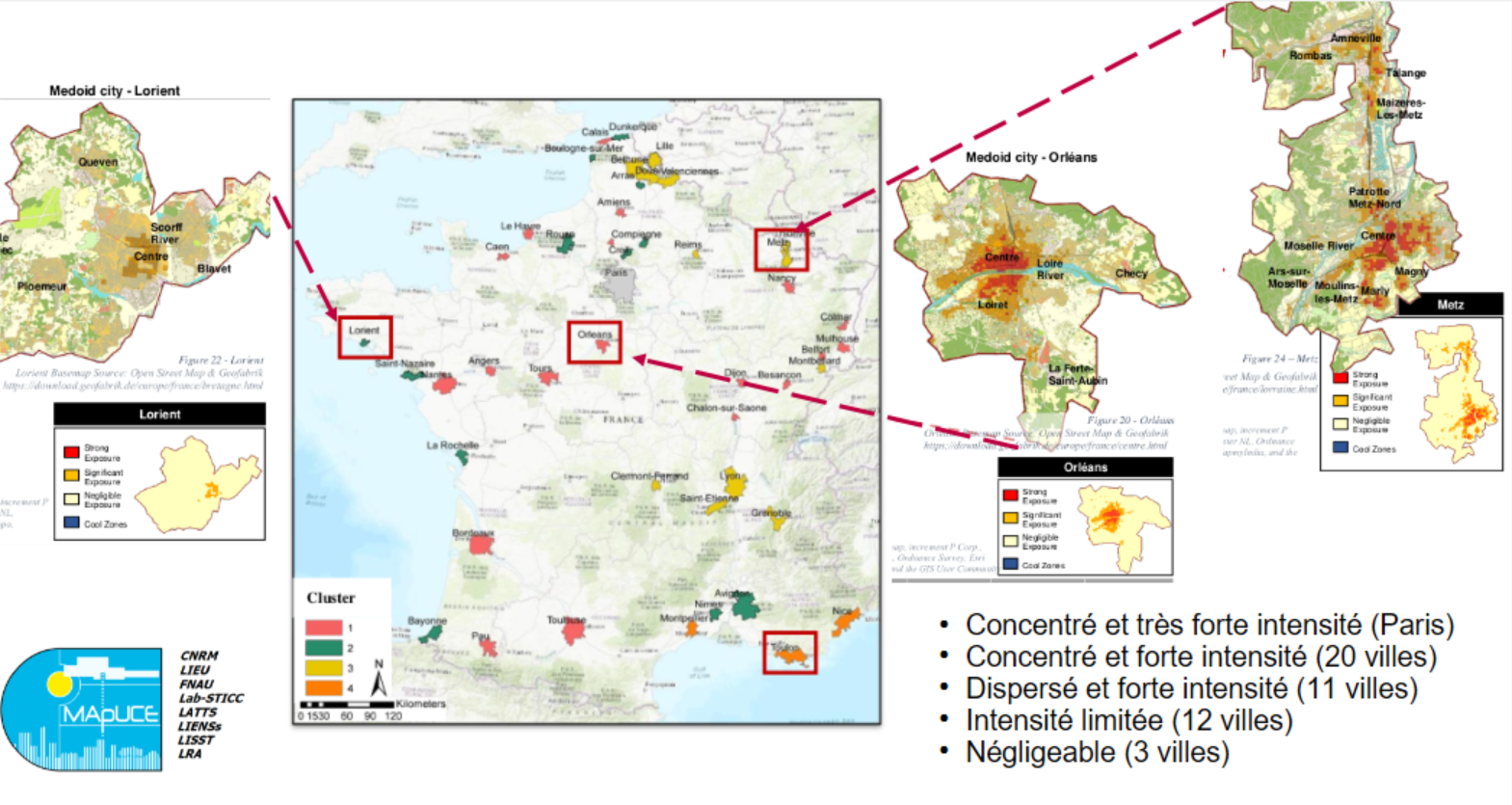
Through analysis of a wide range of French cities, the climatologist Julia Hidalgo and her colleagues have shown that there are several types of urban heat islands, rather than just one. “In some cities, the highest temperatures are experienced in the city centre, while others are more influenced by their topography. And in coastal cities, sea breezes can help with cooling”, explains the researcher from the Interdisciplinary Solidarity, Societies, Territories Laboratory1. This diversity is a reminder that the same problem cannot be dealt with in the same way everywhere.
With this in mind, Julia Hidalgo has been working with Toulouse’s metropolitan authorities to produce climate maps for several years. The idea is to identify the most vulnerable neighbourhoods and the most effective levers for action, with greening, shade provision and the use of less heat-absorbent materials among the approaches under study. However, understanding how a city’s climate works sometimes requires us to look beyond what may appear the most obvious solutions. “Wind, in particular, has a cooling potential that is still rarely taken into account in urban planning”, explains the researcher. And once solutions have been validated, the next step is to move from the model to action.
- 1
CNRS / Université Toulouse Jean Jaurès.
Testing solutions in the field
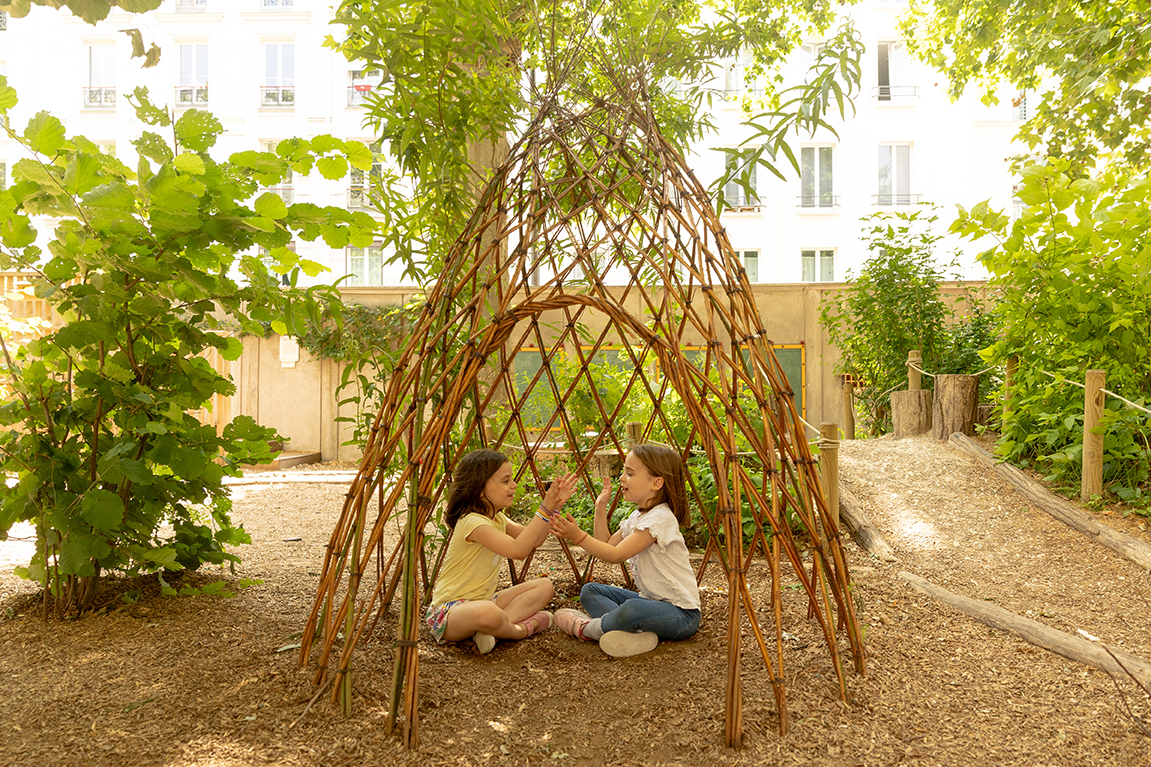
The identification of solutions that are effective in theory does not guarantee their successful implementation in practice. This is one of the lessons learnt from the geographer Nathalie Blanc’s1 research into the ‘Oasis’ initiative to create green school playgrounds rolled out by the City of Paris to promote biodiversity in an attempt to combat urban heat. The idea underpinning these developments is to connect natural spaces to contribute to the ecological continuity required for the movement of species.
Nathalie Blanc and her team worked on determining which school playgrounds should be prioritised for greening. “On paper, the modelled green network looked great but when we arrived at the school playgrounds, problems became evident, like the presence of rats, management issues or maintenance constraints”, explains the director of the Centre for Earth Policies2.
These observations meant the issue was no longer purely scientific, and dealing with real world constraints required the various stakeholders responsible for designing, managing and maintaining these developments to be brought together. “We were the first to set up a single discussion group at local level involving the buildings, parks and schools departments. Although they belonged to the same organisation, they didn’t really communicate with each other”, explains the researcher.
Situations of this kind thus mean the development of shared solutions involves a process of mutual acculturation that may take several years. The researcher’s role therefore now involves supporting the adoption of ideas rather than focusing on producing knowledge.
- 1
Researcher at the Laboratory of Social Dynamics and Spatial Reconfiguration (CNRS / Université Paris-I Panthéon-Sorbonne / Université Paris Cité / Université Paris-Nanterre / Université Paris VIII Vincennes-Saint-Denis).
- 2
The Centre for Earth Policies derives from close collaboration between Université Paris Cité and the Institute of Earth Physics of Paris. It aims to foster a research community working on the necessary combination of the natural and experimental sciences with the humanities and social sciences to deal with the complex challenges of the Anthropocene.
Raising awareness
Supporting the adoption of knowledge can sometimes require researchers to experiment with new tools. This is how the REVE Cot virtual reality project on the risks of coastal flooding along the Normandy coastline came about. This project shares scientific culture around coastal risks so debates can focus on the choices to be made rather than on just the data themselves.
Researchers from the Identity and Differentiation of Space, Environment and Societies Laboratory (IDEES) in Caen1 and the Interdisciplinary Centre for Virtual Reality (CIREVE)2 at Université Caen Normandy have drawn on historical events, residents’ stories and digital modelling to reconstruct several scenarios of rising sea levels along the Normandy coast. The tool they presented to over 500 elected representatives has now shifted the debate. “We’ve gone from decision-makers telling us ‘that’s not possible’ to ‘how do we actually do this?’”, sums up the geographer Stéphane Costa.
This positive reception in Normandy actually reflects a growing demand for scientific expertise from local authorities and decision-makers. The Normandy ‘IPCC’ commissioned by the regional authorities is a perfect illustration of this. The initiative synthesises scientific knowledge on the impacts of climate change in Normandy to inform the public decision-making process. “The way nature is changing is actually helping us because decision-makers can see the effects of climate change in their own areas. Combined with the trust built up through research and increasingly scarce public funds, this is driving the emergence of more collective solutions”, adds Stéphane Costa, who is the joint chair of Normandy’s very own ‘IPCC’.
Anticipating the future climate
However, one-off collaborations can sometimes prove inadequate when faced with climate challenges across several decades. This is why the city of Rennes in Britain has set up the RENNAT joint laboratory1. This highly integrated partnership model brings together researchers from the Coastline, Environment, Remote Sensing, Geomatics Laboratory (LETG)2 and representatives of the local authorities who are working together on the future of the city’s tree heritage in the face of increasingly frequent heatwaves. LETG aims to plan future developments of the area’s green spaces whilst offering researchers privileged access to nearly one hundred thousand trees.
A practical question lies at the core of this partnership (the first between the CNRS and a local authority), namely “which trees should be planted today to help the city adapt to the climate of the future?” Didier Chapellon, the City of Rennes’ biodiversity representative, explains that “some species will have to be replaced and others need to be introduced gradually. But we still need scientific data to feed into these decisions”.
The strength of this collaboration also derives from its capacity to situate public action within the timeframe of climate change. Justin Amiot, the councillor responsible for higher education and research, points out that “we know we need to take a step back, but we don’t really always take the time to do that. Engaging with scientists enables us to lift our noses from the grindstone, as it were”. This requires a long-term investment, which is particularly evident in the case of the city’s tree heritage, with benefits that will prove their worth well beyond immediate political deadlines.

Living with the climate of tomorrow
Adapting regions ultimately means understanding how residents actually experience the heat, which was the starting point for the biometeorologist Manon Kohler’s work. “The development of models used to assess thermal comfort was based on healthy adult men”, points out the researcher from the Theorizing and Modeling for Land Use Planning Laboratory1. “And yet, we’ve shown that children’s heat stress thresholds are one to two degrees lower than those of standard profiles”. Women, older people and individuals with certain medical conditions also have different sensitivities to heat.
However, information on people’s adaptive behaviours remains underused in spatial planning so the researcher is therefore collaborating in the field with the Grand Besançon metropolitan authorities on mapping refuge spaces. She highlights sometimes significant discrepancies between the places the metropolitan authority thinks offer protection and those that people actually use during heatwaves. “A refuge is not necessarily a cool place. Above all, it’s a place where people seek to escape a perceived danger”, she summarises.
Manon Kohler’s view is that climate adaptation cannot be considered in isolation from health and usage patterns, an approach that is all the more important given that certain measures that are effective now may prove insufficient in the climate of tomorrow. “We’re heading towards hotter summers and our benchmark of what is normal will change”, she observes, a prospect that calls for a rethink of what adapting to climate change really means. Is the objective to reduce the temperature at any cost, or to learn to live in an environment that will inevitably become hotter?
- 1
CNRS / Université Bourgogne Europe / Université Marie et Louis Pasteur.
Wildfires – a new risk for France at +4°C
As well as their collaborative work with local authorities, CNRS scientists also contribute to collective scientific expert reviews of the state of the art on a specific subject for public authorities. The report published at the end of May 2026 on the resilience of "urban interfaces exposed to wildland fire in the broader context of climate change" highlighted the causes and consequences of wildfires on the outskirts of towns and cities. It also set out a number of ways public authorities could address the issue, both in the short and longer term.