
The unique chemistry of French Guiana's army ant venom
Life
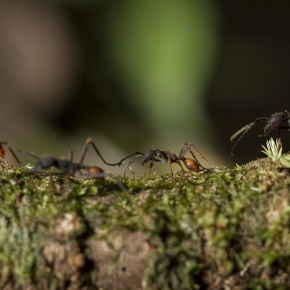
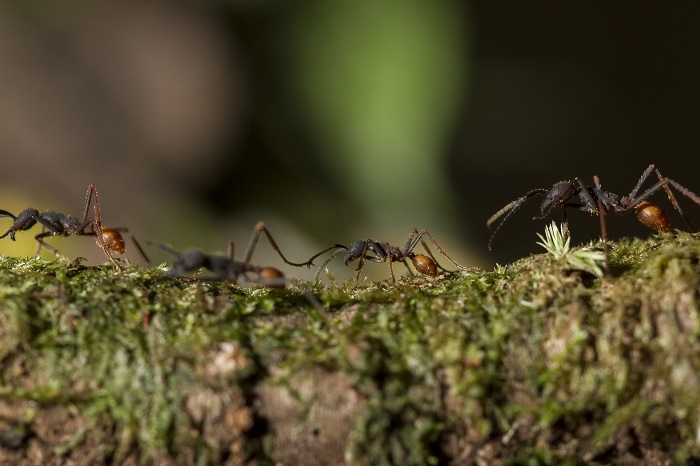
In Amazonian army ants (Eciton hamatum), the soldiers' venom does more than just defend against predators. It also contains digestive enzymes, which are probably used to begin predigesting prey tissue before it is consumed by the rest of the colony. The previously unknown presence of these molecules in the venom's composition reveals a more complex role for soldier ant venom in colony feeding. Led by scientists from the CNRS1, this study will be published in the journal Molecular Ecology on the 17th of March 2026.
Scientists analysed venom samples from Eciton hamatum using a combination of analytical chemistry and molecular biology approaches. They showed that each caste2 produces a distinct venom: workers secrete a complex mixture of toxins, while soldiers have a simpler venom with multifunctional properties.
Army ants have a very distinctive lifestyle. They are nomadic, moving in columns and hunting other insects collectively. As adults are unable to ingest solid prey, digestion usually relies on the larvae3. However, during the colony's nomadic phases, the larvae are often temporarily absent. The soldiers may therefore use their venom to begin chemically breaking down the prey, thus facilitating feeding for the entire colony.
With over 14,000 species described, ants are an exceptional reservoir of chemical diversity: the composition of their venom varies not only between species, but also between castes within the same colony. Studying them shows how pressures related to defence, predation and social organisation shape varied chemical strategies over the course of evolution.
Notes
- Working at the Écologie des Forêts de Guyane laboratory (AgroParisTech/CIRAD/CNRS/INRAE/Université de Guyane/Université des Antilles). Scientists from the Centre de Recherche sur la Biodiversité et l'Environnement (CNRS/IRD/Toulouse INP/Université de Toulouse) also participated in this work.
- Army ants are divided into castes: workers (media/minor, submajor) and soldiers.
- The larvae produce digestive enzymes, including chymotrypsins, which can transform these solid foods into nutritious liquids. They then regurgitate this in a pre-digested form to feed the adults.
Bibliography
Caste-specific functional variation in the venom of the army ant Eciton hamatum.
Axel Touchard, Samuel D. Robinson, William Atherton, Jérôme Orivel, Irina Vetter, Corrie S. Moreau, Molecular Evolution, the 17th of March 2026.