Yakutia: The History of an Indigenous People Confronted with the Colonial Experience
Paris,
Society
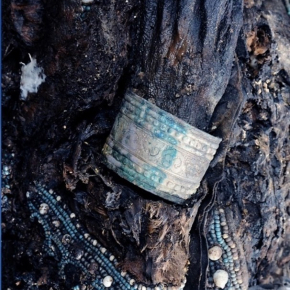
In northeastern Siberia, centuries of Russian imperial expansion initiated by the Cossacks slightly altered the biology of the Indigenous populations of Yakutia. Genetic and microbial analyses of 122 individuals buried between the 14th and 19th centuries reveal remarkable stability despite major cultural, health, and dietary upheavals. This was recently demonstrated by an international study coordinated by scientists from l’Université de Toulouse and from the CNRS within the Centre for Anthropobiology and Genomics of Toulouse (CAGT, CNRS/Université de Toulouse), published in Nature on 7 January. These results, made possible by the exceptional preservation of the subjects in the Siberian permafrost, shed new light on the history of an Indigenous people living in one of the most extreme environments on Earth.
Bibliography
An ancient DNA perspective on the Russian Conquest of Yakutia.
Éric Crubézy, Perle Guarino-Vignon, Andaine Seguin-Orlando, Clio Der Sarkissian, Kristian Hanghøj, Sylvie Duchesne, Patrice Gérard, Catherine Thèves, Ameline Alcouffe, Liubomira Romanova, Daryia Nikolaeva, Lilia Alekseeva, Christiane Hochstrasser-Petit, Vincent Zvénigorosky, Christine Keyser, Bertrand Ludes, Michel Petit, Henri Dabernat, Annie Géraut, Edouard Jyrkov, Arkadiy Sharaborin, Nikolai Kirianov, Natalia Tsydenova, Irina Dambueva, Boris Bazarof, Anne Boland, Jean-François Deleuze, Rosalia Bravina, Anatoly Alexeev, Étienne Patin, Charles Stépanoff, Lluis Quintana-Murci, Ludovic Orlando. Nature, 7 January 2026.
DOI : https://www.nature.com/articles/s41586-025-09856-5
Contact
Ludovic Orlando
Paléogénomique