

80 years of the CNRS in Paris-Saclay: a model of collaboration between science and industry
In 1946, the CNRS established itself in Gif-sur-Yvette. Today, it is a major player in the Paris-Saclay science and technology cluster, which has become a key hub for collaboration between science and industry.
Key takeaways
The CNRS is a key player within the Paris-Saclay cluster, a strategic infrastructure of national and international significance.
Collaboration between science and industry in the region benefits from exceptional facilities and a pool of high-calibre talent, enabling it to serve as a model.
Eighty years after the CNRS moved to Paris-Saclay, the challenge now is to transform this local ecosystem of excellence into a lever for global competitiveness.
The region can serve as a testing ground for shaping innovation policies and structuring industrial sectors.
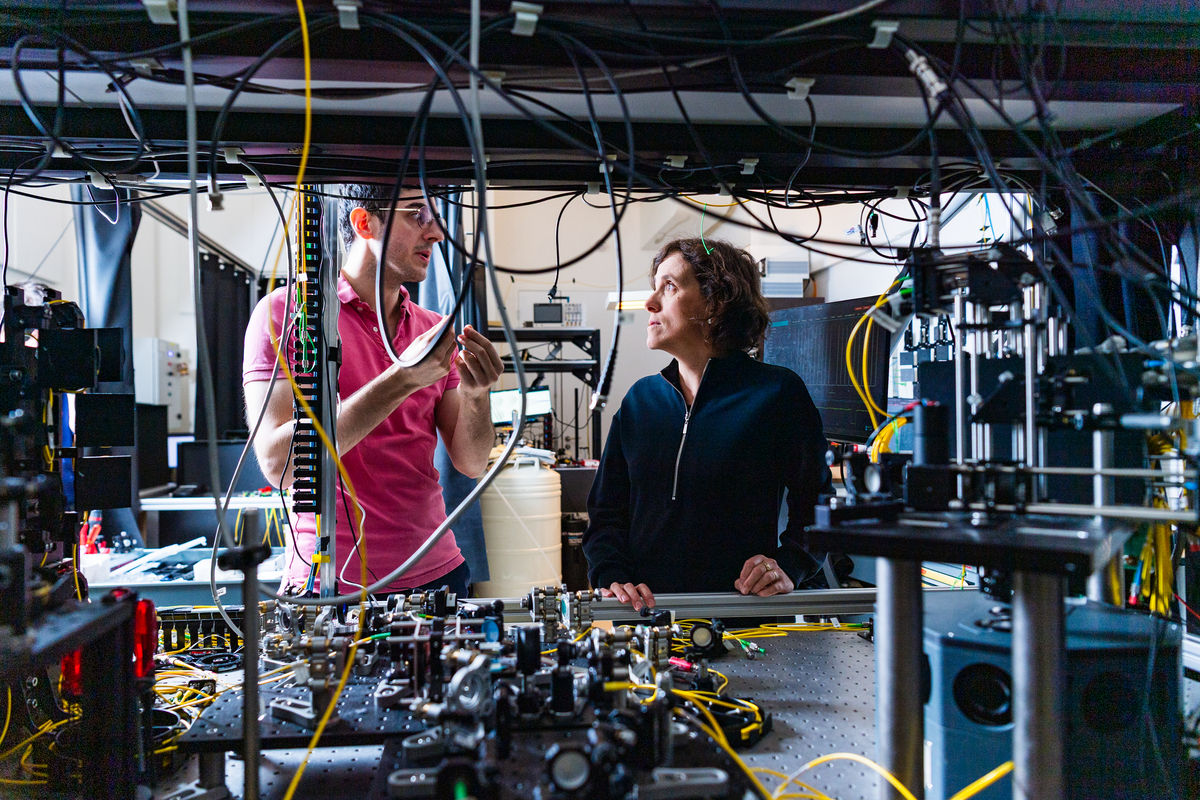
On April 14th 2026, the Lucy quantum computer was unveiled. “This is the world’s most powerful photonic quantum computer,” explains Pascale Senellart with a grin. This CNRS researcher at the Centre for Nanosciences and Nanotechnologies (C2N)1 was awarded the 2025 CNRS Innovation Medal and jointly founded the Quandela start-up, a spin-off from the CNRS. This French quantum start-up was launched in 2017 and now has over 140 employees, making it a prime example of the excellence of the research-innovation continuum at Paris-Saclay. Alongside a German partner, she was at the origins of the Lucy computer based at the CEA’s scientific computing complex in Bruyères-le-Chatel, in the Essonne region of France.
- 1CNRS laboratory / Paris-Saclay University
Paris-Saclay's research-innovation excellence was constructed over the long term and indeed the CNRS will be celebrating 80 years of its presence in the region in 2026. “The CNRS has 100 research units and 3800 staff members there, making it a key stakeholder in the ‘scientific city’ envisioned by Frédéric Joliot-Curie in 1946 which has now become one of the world’s most powerful scientific and technological hubs,” explains Antoine Petit, the CNRS Chairman and CEO.
Fertile ground
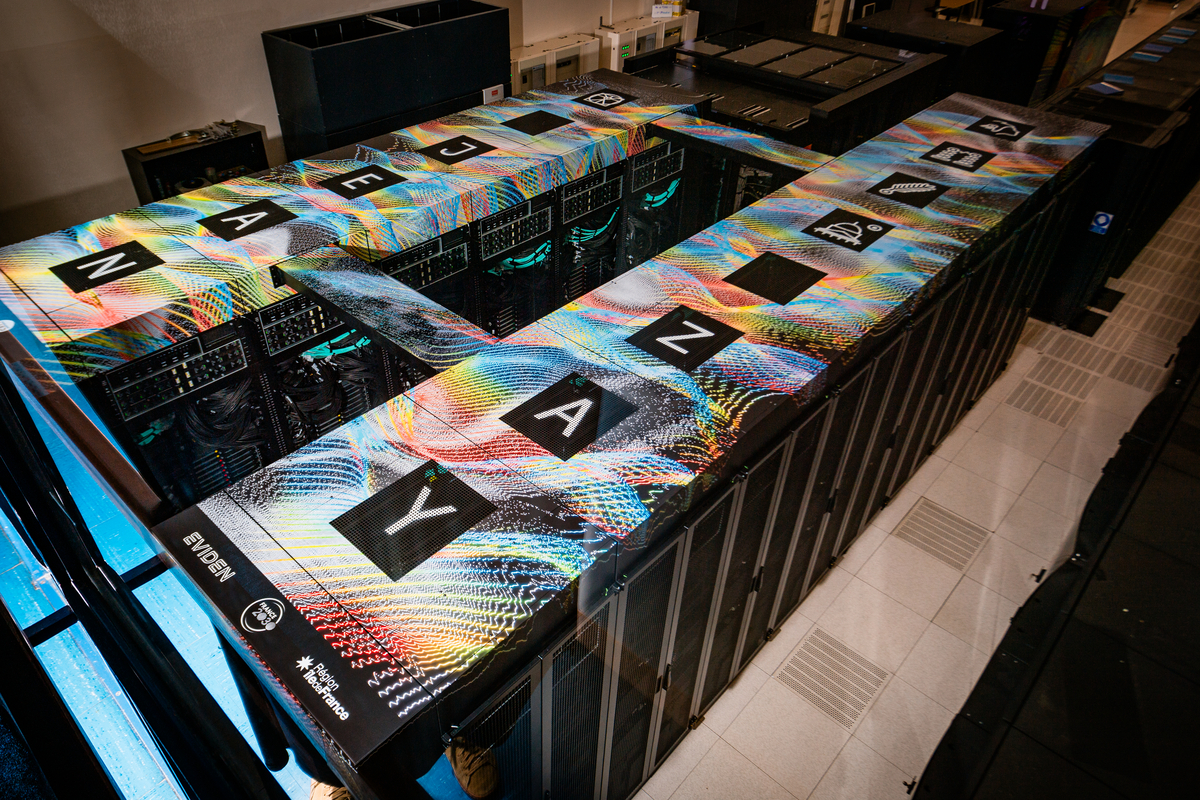
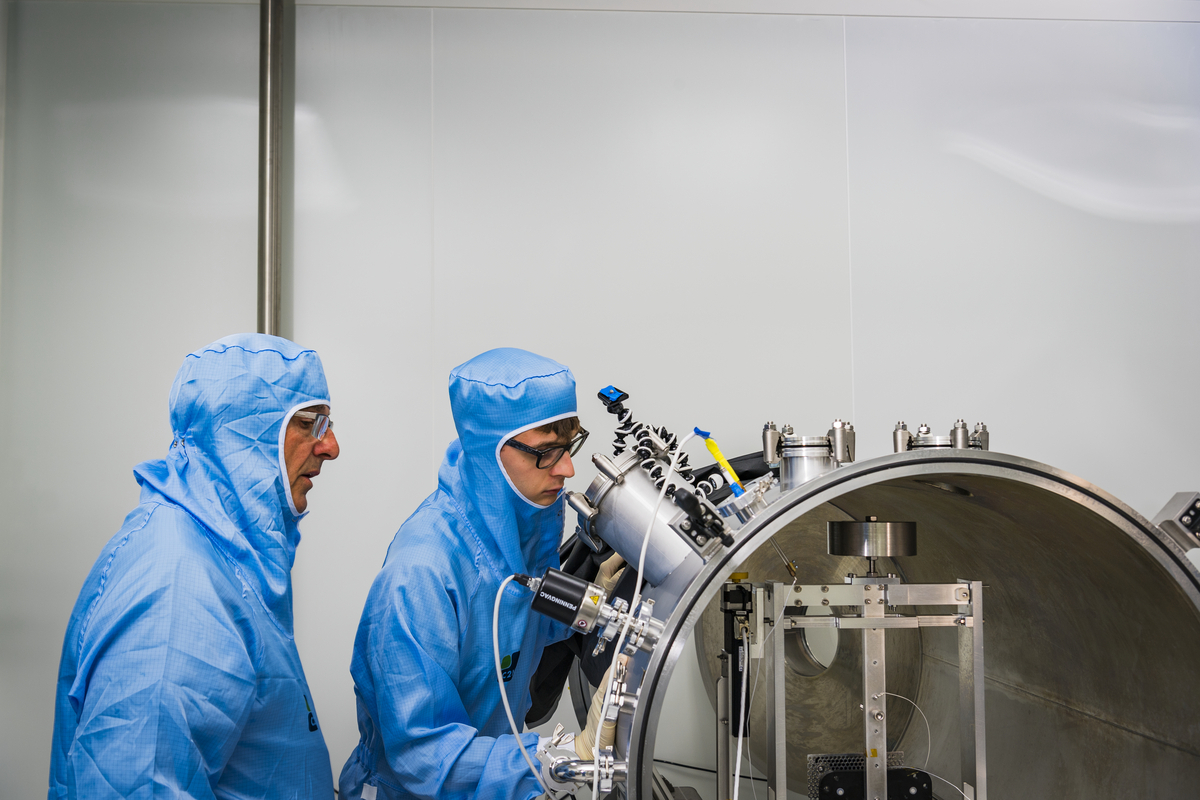
Its main strength lies in the concentration of exceptional infrastructure. “We benefit from facilities that are unique in France, like the C2N clean room - one of the largest academic technology centres in Europe,” emphasises Jacques Gierak, a CNRS research engineer and the founder of the Ion X start-up, a collaborative initiative with CNES and Airbus and a global leader in ionic liquids. Just like the SOLEIL synchrotron, a particle accelerator for exploring matter, or the Jean Zay supercomputer, a major asset for the development of AI and climate science, these facilities pave the way for world-class research.
Another crucial strength derives from the presence of many universities and engineering schools that are key partners for the CNRS. Paris-Saclay University and the Institut Polytechnique de Paris serve as academic “hubs for top-level training we can rely on”, says Pascale Senellart. “This training-research-innovation continuum is particularly valuable,” agrees Géraldine Masson, a CNRS researcher at the Institut de Chimie des Substances Naturelles (ICSN)1 and director of the HitCat joint laboratory which develops new synthesis routes for low-cost generic drugs in collaboration with the Seqens company.
Spearheading French technological sovereignty
This unique density of stakeholders has helped create a unique ecosystem in which basic research and industrial innovation successfully dovetail. CNRS researchers and their academic partners have capitalised on the presence of the R&D centres of major groups like Horiba, Danone and Servier to develop around thirty joint CNRS/industry research structures, or 'labcoms' in the region. “Collaborating with industry is not a constraint, it's really the opposite,” says Jacques Gierak. “Companies also have excellent experts and exchanges with them are very productive because basic research can develop in new directions by listening to their requirements.”
- 1CNRS laboratory
Paris-Saclay scientists have filed over 260 patents in five years, with around 60 start-ups set up since 2016, which makes it a particularly fertile ground for the transfer to innovation. All fields are covered - from health to space, from quantum science to climate, from energy to materials - and the CNRS is continually refining its model at Paris-Saclay. Antoine Petit explains that “in this way, the organisation is helping transform the region into one of the spearheads of French technological sovereignty.”
Alongside this, the Paris-Saclay science and technology cluster enjoys exceptional international renown. In the 2025 Shanghai Ranking, Paris-Saclay University is the top French institution and ranks thirteenth globally. The 117 European Research Council grants awarded to CNRS researchers there since 2014 and the site's six Nobel Prizes also clearly testify to this.
Supporting the dialogue between two worlds
To maintain strategic advantages of this kind, the dialogue between research and industry needs to be bolstered. “We should demystify the transition between these two worlds,” argues Jacques Gierak. This research engineer and recipient of the 2023 CNRS Innovation Medal in 2023 contributes to this in his capacity as the CNRS Innovation Ambassador at Paris-Saclay. These ambassadors share their experiences to encourage their peers to take the step towards technology transfer.
Another challenge is to ensure the sustainability and scale of funding (including European grants) in a context of intensifying international competition. “In France, we don’t have the same venture capital culture as the United States,” notes Géraldine Masson. “Without sustainable support, we risk seeing our talent leave for new horizons in the US or China,” adds Pascale Senellart.
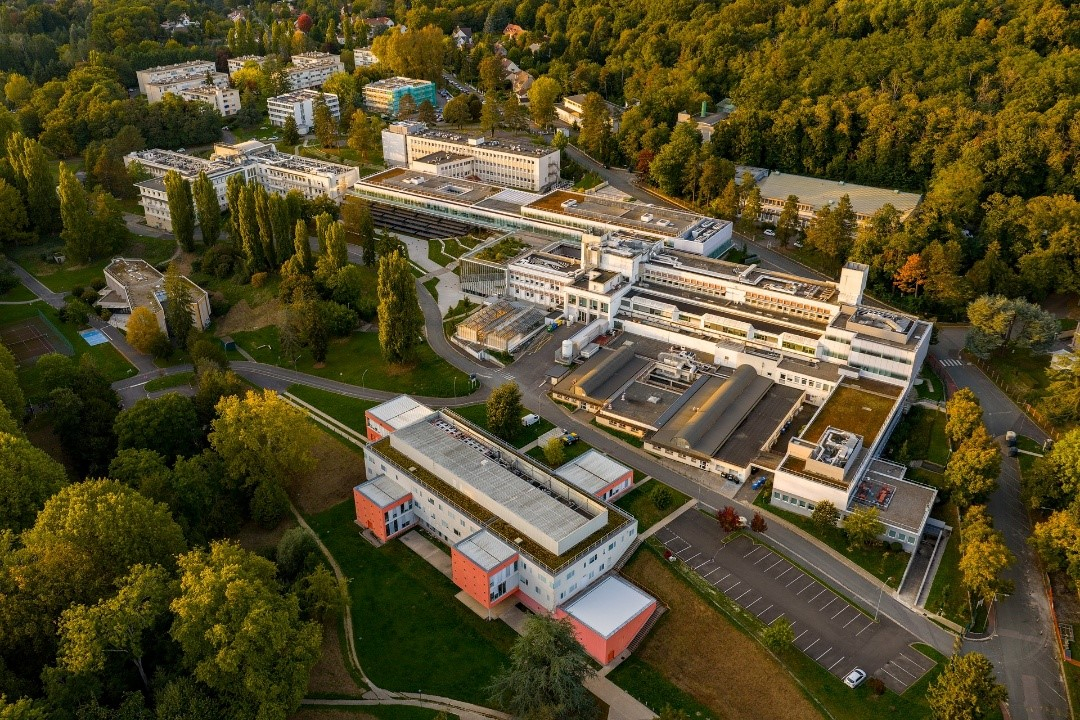
The Paris-Saclay site is widely viewed as a model and, in this context, can serve as a testing ground for guiding innovation policies and structuring industrial sectors. In this way, locally-developed best practices could spread and go on to become a lever for broader competitiveness.
At the CNRS, efforts will continue to focus on transferring results to society, which is in line with the organisation's Objectives, Resources, and Performance Contract. “We are now setting our sights on 2036,” concludes Antoine Petit.