The CNRS and its partners from the G6 are committed to academic freedom
The six primary European research organisations, together forming the G6 network representing 135,000 collaborators – CNR (Italy), CNRS (France), CSIC (Spain), Helmholtz Association, Leibniz Association and Max Planck Society (Germany) – published a joint declaration calling for the European framework for academic freedom to be strengthened.
Key takeaways
Academic freedom is exposed to growing pressure in the world.
Its defence is one of Europe’s strategic priorities.
The primary European research organisations, together forming the G6 network, have called for the European framework for protecting academic freedom to be strengthened.
The G6’s proposals include support for a clear and binding legal basis for academic freedom as a fundamental value of the European Union.
The G6 also plans to create a European “safe haven” to temporarily welcome researchers in danger.
On 24 April 2026, the members of the National Science Board, the advisory body supervising the primary funding organisation for basic research in the United States, were dismissed with no explanation. This decision by the White House has been interpreted as a fresh attack on academic freedom in the country.
Academic freedom is, in fact, subject to growing pressure in the world. The Academic Freedom Index, developed by the Friedrich-Alexander-Universität Erlangen-Nürnberg (FAU) and the V-Dem Institute, has noted a decline in academic freedom in 50 countries during the 2015-2025 period. All indicators have deteriorated, including freedom of teaching and research, freedom of academic and cultural expression, and institutional autonomy — in other words the ability of universities and research organisations to govern themselves without undue intrusion from the government.

Against this context, Europe has gradually engaged with this topic, which is considered “one of our assets for attracting, training, and retaining talent,” according to Antoine Petit, President and CEO of the CNRS. Inscribed in the Charter of Fundamental Rights of the European Union since 2000, the defence of academic freedom is now the central focus of a European Parliament forum created in 2022. The rapporteur of the future European Framework Programme for Research and Innovation (FP10), Christian Ehler, has even established a direct link between protecting academic freedom and the soundness of the European project.
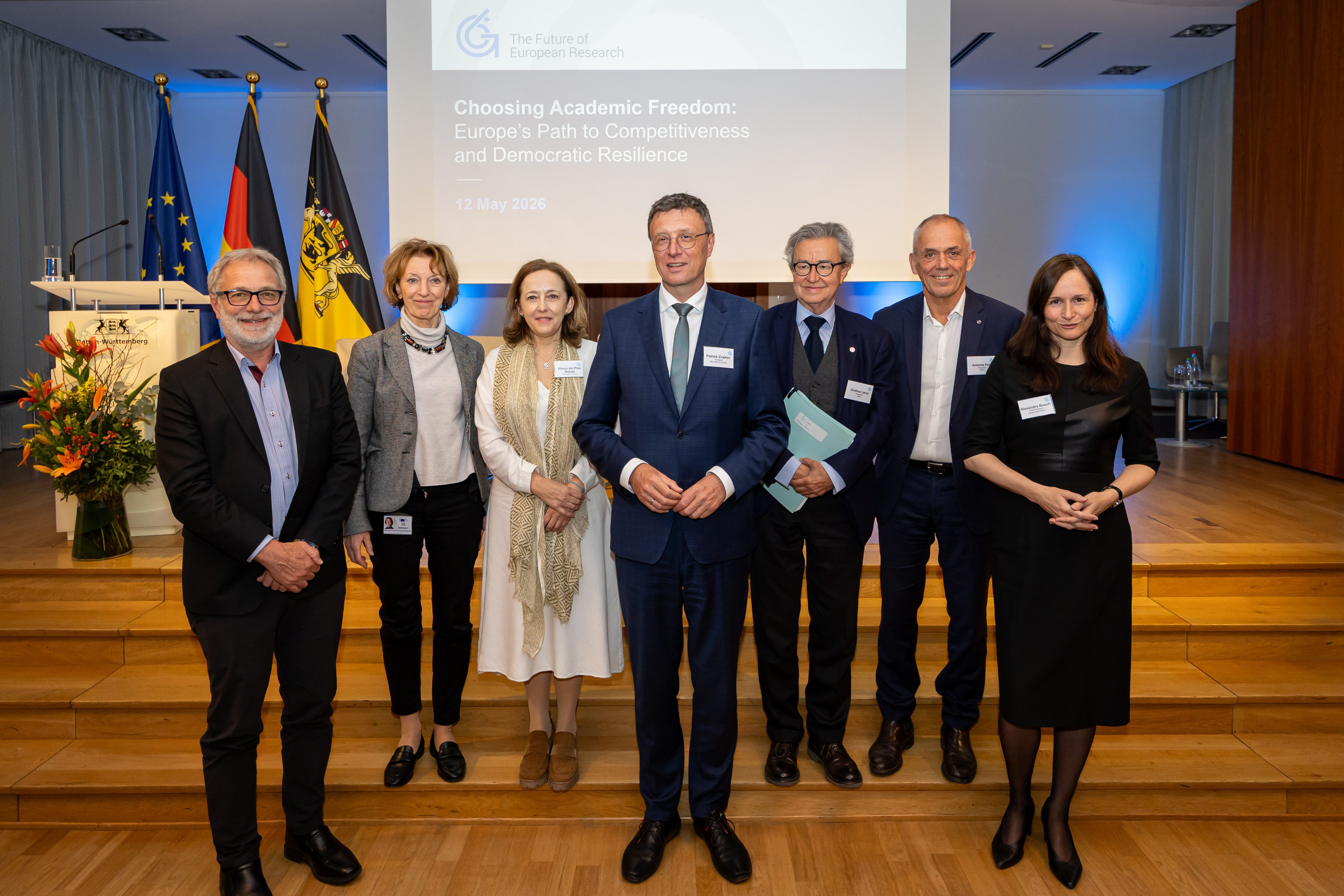
In support of this dynamic, the six primary European research organisations1 , together forming the G6 network, have even made it a strategic priority. In a position paper made public during the institutional event held in Brussels on 12 May 2026, the G6 called for strengthening the European framework for protecting academic freedom. It emphasized the importance of a clear and binding legal basis for academic freedom as a fundamental value of the European Union, as well as expanded support for research in a context where budgets dedicated to science are shrinking. Members of the G6 also aim to bolster their collective action, notably through the creation of a future European “safe haven” to temporarily welcome researchers in danger. This aspiration was highlighted by Antoine Petit on May 12, who, echoing the words of European Commission President Ursula von der Leyen, argued that “science in Europe has no passport, no gender, no ethnicity or political party.”
With this declaration, the G6 reaffirms its commitment to protecting academic freedom, an essential pillar of the European Union.
- 1Consiglio Nazionale delle Ricerche (CNR, Italy), Centre national de la recherche scientifique (CNRS, France), Consejo Superior de Investigaciones Cientificas (CSIC, Spain), Helmholtz