

The CNRS has launched a new international research centre with the University of the Witwatersrand
Corporate
The CNRS is launching its seventh International Research Centre, this time with the University of the Witwatersrand in South Africa. This first centre of this kind on the African continent was officially announced on November 28th. Zeblon Vilazaki, the Vice-Chancellor and Principal of the University of the Witwatersrand, gives details of the new IRC's ambitions.
The CNRS has just set up its 7th International Research Centre (IRC) in a strategic partnership with the University of the Witwatersrand that further reinforces the organisation's links with world-class universities.1 In a global context in which the African continent is often cited as being of central importance for the 21st century, how will this new centre contribute to respond to the major challenges it faces ?
Zeblon Vilakazi2 : The Africa of today is very young and demographically similar to Asia in the 1950s. Universities of excellence play a major role and need to inspire these young people to create businesses, jobs and growth. We need strong institutions to make sure these opportunities are seized in the next 50 to 70 years.
The current strategy for the development of emerging technologies in Africa like AI and quantum computing is along the lines of the concept of 'leapfrogging' whereby progress is made in successive stages in an attempt to close a gap that's built up. Our university invested in the creation of the Machine Intelligence and Neurodiscovery Institute (MIND), one of Africa's largest AI institutes, precisely to stay at the cutting edge of innovation. The same is true of the Wits Quantum Institute which combines basic research, training and the development of industrial applications around quantum technologies. Initiatives like these are part of a fine overall ambition - to bring Africa into a new scientific and industrial era.
Paradoxically, AI also consumes a great deal of energy. The major challenge in this area is to drive development without replicating the model based on the combustion of fossil fuels that's been developed for a century now in Europe, the United States or Japan. That's why we host the Global Change Institute, Africa's largest climate change institute, in conjunction with French research.
Health issues are just as vital for the African continent. Africa makes up 20% of the world's population and is facing major health challenges like tuberculosis, malaria and Ebola. And yet, the continent only contributes 2% to world health research. This is why the University of Wits has embarked on the construction of its Biohub campus, a real research and innovation ecosystem that will bring together researchers, clinicians and entrepreneurs.
These various centres represent opportunities to reinforce our collaborations with the CNRS and its IRC partners to provide responses to the global challenges that affect Africa, a point we discussed during the One Health round table at the Connecting Talents: Shaping the Future of Global Science event.
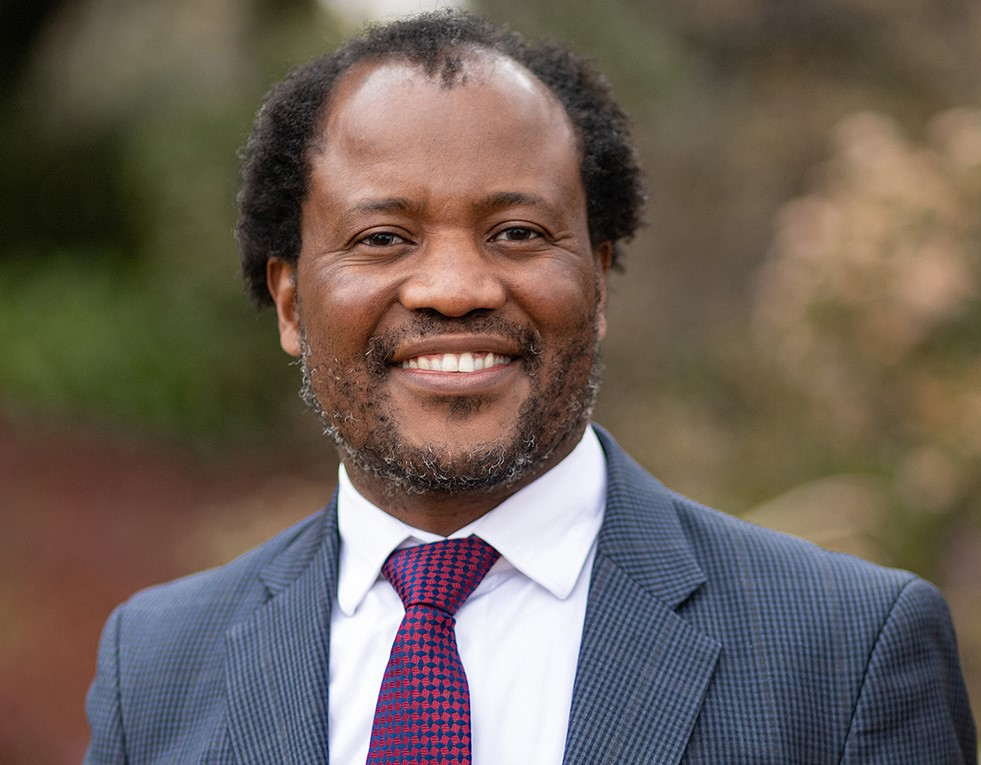
Zeblon Vilakazi is the President of the University of the Witwatersrand.©University of Witwatersrand
How does the CNRS-Wits IRC contribute to your international strategy?
Z.V.: With this IRC, the university is affirming its driving role for research in Africa. We'd like Wits to be considered as a gateway to Africa. The new IRC was designed to be a national and even regional hub in Africa that also includes other major universities in southern Africa, and even across the continent, in its projects. The CNRS-Wits IRC will be able to base its work on our existing partnerships and multilateral networks in Africa, particularly the ARUA networks of African universities.
The collaboration between the CNRS and Wits is designed to be a mutually beneficial initiative. It is important to us to make sure our South African national centre of excellence in mathematical sciences benefits from France's excellent tradition in this field which the CNRS particularly embodies.
The CNRS's IRC network also opens up many collaboration opportunities, particularly South-South partnerships like with the University of São Paulo which hosts the 'Transitions' IRC in partnership with the CNRS. Wits and São Paulo have a several similar features. Both are large universities located in megacities in the Global South that are characterised by a high level of industrialisation and marked inequalities.
What position does the University of the Witwatersrand occupy within the African continent and in the world?
Z.V.: The University of the Witwatersrand is located in Johannesburg and has distinguished itself as one of the African continent's best universities with four Nobel Prize winners, including Nelson Mandela who was awarded the Nobel Peace Prize. Its history is entwined with the development of mining and industrialisation in South Africa which intensified towards the end of the 19th century with the discovery of gold. Gradually the university expanded, with science and technology being complemented by excellent courses in law or also the humanities and social sciences, including palaeontology and palaeoanthropology. Today, Wits University is ranked among the world's top 300 universities.
Our international partnerships have mostly been oriented towards institutions in the North which possess greater resources, can help bolster our own capacities and pave the way for new collaboration opportunities on the global stage. I myself have worked with the CNRS as a researcher at the European Organisation for Nuclear Research (CERN).
Finally, Wits is a university which has a strong international focus. The capital Johannesburg's cosmopolitan nature is reflected within our university as is its position as Africa's economic and industrial centre, which of course hosted the G20 this year. Around 10% of our students come from other mainly French-, English- and Portuguese-speaking countries.
The pillars of the CNRS-Wits IRC:
The pillars of the CNRS-Wits IRC:
The new IRC 'SHARE', which stands for "Science Hub for sustAinable Research", has been constructed around scientific pillars designed to be interconnected through work on interdisciplinary research themes.
Mathematics: The new IRC's aim is to federate a network of mathematicians across the continent to create a mathematics hub.
Physics: Wits is an integral part of an already robust dynamic with South African universities in Cape Town, notably through the 'Pauline' IRN.
Paleosciences, Earth and Space: This pillar can build on the historic collaboration of over 80 years between the CNRS and Wits and aims to develop interdisciplinary approaches that combine the histories of space, the Earth and humankind.
Environment: Climate, ecology, biodiversity, resources... The aim in the framework of this pillar is to work on interdisciplinary projects that involve other African universities and thereby enrich the approaches to be implemented.
The 'SHARE' IRC is a major achievement in the framework of the CNRS's Multi-year Cooperation Plan with Africa which has led to the funding of more than 60 projects over the past three years by the CNRS.