“Japan’s association with Horizon Europe opens new prospects for European research”
On the occasion of the French President’s visit to Japan, Bruno Le Pioufle, the new Director of the CNRS Tokyo Office for Northeast Asia, presents the country’s association with Horizon Europe, and issues relating to CNRS collaborations in the region.
The President of France, Emmanuel Macron, will be visiting Japan between 31 March and 2 April 2026. What are the scientific cooperation aspects of his visit?
Bruno Le Pioufle : Japan is a country where science is especially supported in terms of policy. In 2024, 3.7% of the country’s GDP was allocated to it. Among the most striking initiatives, the government committed to endowing a fund totalling 10 trillion yen (60 billion euros), whose dividends will sustain research for 25 years. The goal is to return multiple Japanese universities to the ranks of the world’s best institutions.
Scientific cooperation between France and Japan is longstanding and fruitful. Since the first agreement signed in 1974, the partnership between our two countries had been strengthened regularly. Today it revolves around a roadmap signed in 2023, whose research component encourages collaboration in the field of semiconductors, energy, quantum technology, materials science, health, biotechnology, marine science and agriculture.
One illustration of this relation of trust is the extensive collaboration with the CNRS, which counts over 80 research actions in Japan, including 15 international laboratories. A scientific experiment in cryptography will be conducted in one of these CNRS laboratories during Emmanuel Macron’s visit. It is based on a new data storage and encryption system that uses the properties of DNA. This work, supported by the French National Research Agency and the MoleculArXiv PEPR, and led by the CNRS, is part of extensive French-Japanese collaboration with the University of Tokyo (UTokyo).
The CNRS has developed a preferred partnership with the University of Tokyo via the creation of an international research centre in October 2022. What are the primary accomplishments?
B. LP. : The especially fruitful nature of our collaboration with UTokyo prompted us to create an International Research Centre (IRC)1 . The goal is to facilitate exchanges between the five international laboratories that make it up, in keeping with a resolutely interdisciplinary dynamic. The IRC encourages researchers to focus on topics that have been identified as strategic by the two organisations. One example is the “Women and Science” French-Japanese conference held in October 2024.
- 1An international research centre is an institutional instrument that establishes ambitious strategic dialogue between the CNRS and its academic partner, with a view to defining shared interests and the collaborations needed to jointly pursue them in the form of international research laboratories, research projects, thematic networks, and other existing or as-yet undeveloped measures.
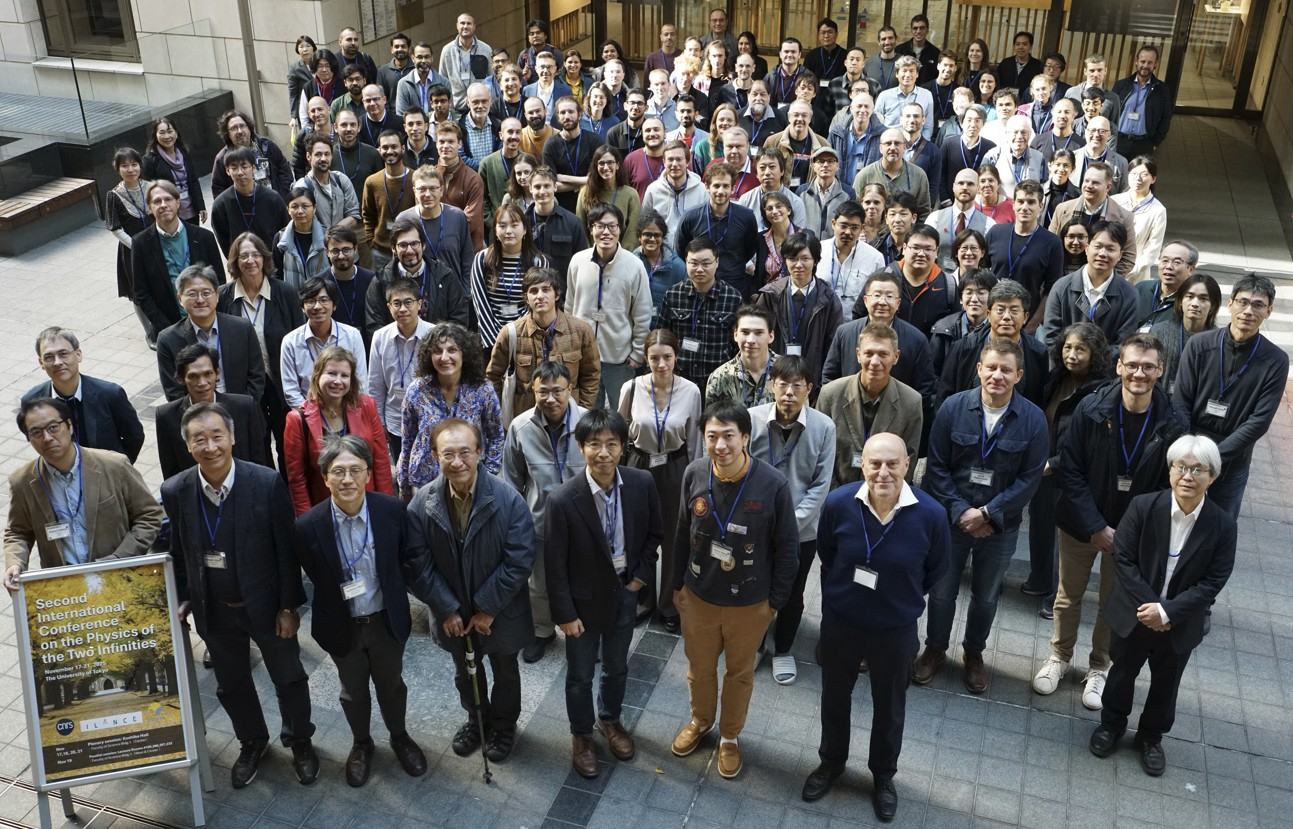
This strategic partnership is based on the tools developed a few years earlier, whose effectiveness has already been demonstrated. This is true, for instance, of the Joint PhD Programme, an annual call for proposals that funds theses and the paired international mobility of doctoral students in France and Japan. The mobility of young talent was also central to another gathering held in October 2025, which brought together representatives from seven CNRS IRCs across the globe.
After years of negotiations, the European Commission and Japan concluded an agreement in December 2025 to associate Japan with the Horizon Europe programme. What will this new development contribute?
B. LP. : Japan could, from the very signing of the agreement in the summer of 2026, gain access to Pillar II of Horizon Europe, which involves the implementation of collaborative projects between laboratories from multiple European and associated countries on targeted issues. This novelty would enable French-Japanese teams to jointly respond to calls for proposals, and to address scientific challenges deemed a priority by Europe. Their complementarity in terms of scientific approach and experimental resources could only benefit European research, for which the CNRS is a major actor.
This year the CNRS celebrated the 35th anniversary of the opening of its Tokyo Office. In what scientific fields is collaboration between the CNRS and Japan especially active? Which are the CNRS’s primary partner organisations in Japan?
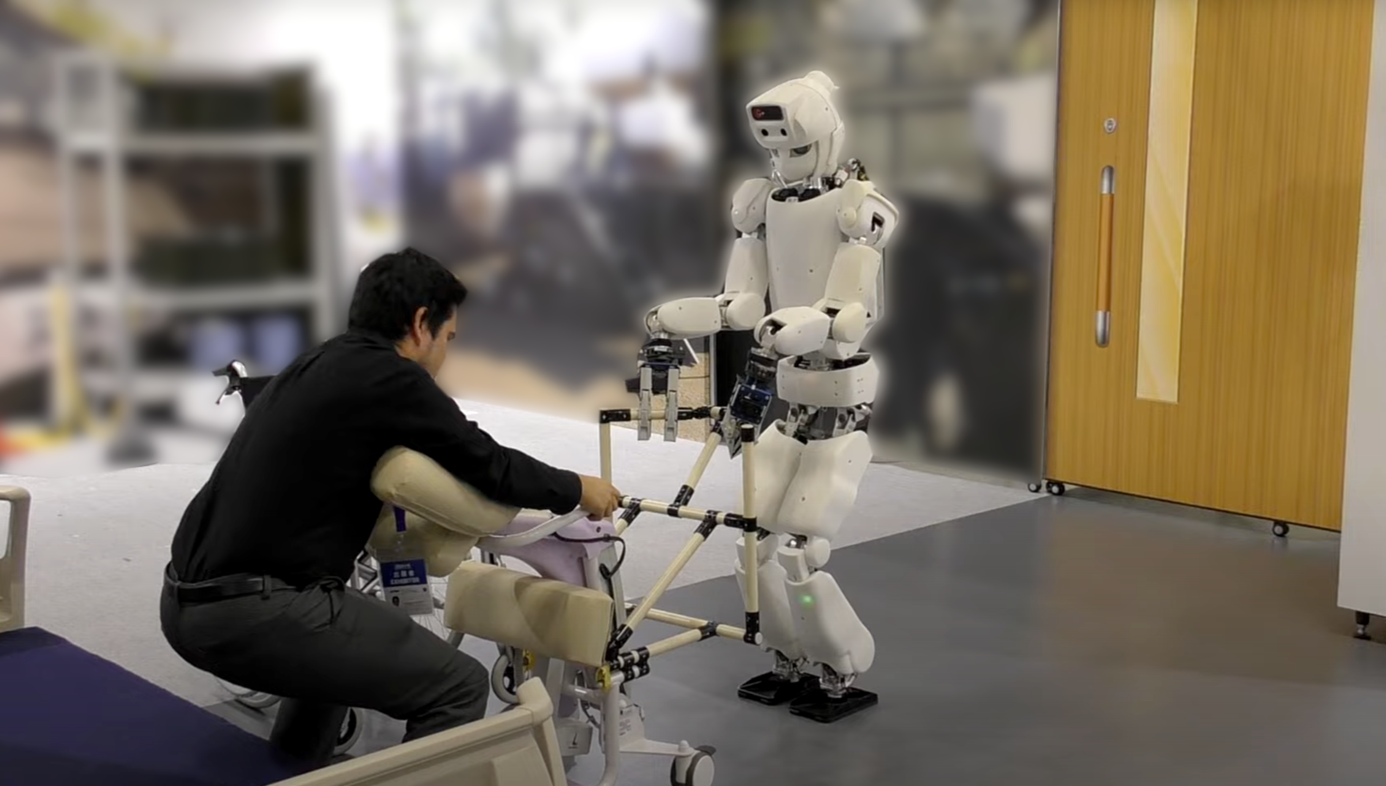
B. LP. : It was in Japan, in 1995, that the CNRS created its first international research laboratory, the Laboratory of Integrated Micro Mecatronics Systems (LIMMS), an engineering laboratory that develops high technologies for applications in health and energy. Since then, collaboration between the CNRS and Japan has expanded to all scientific fields, ranging from physics and astronomy to mathematics, computer science, biology, chemistry, and the humanities and social sciences. This multidisciplinary basis allows our organisation to cover topics identified by the roadmap, and to respond to major societal issues, such as artificial intelligence and quantum technology.
This diversity of topics is matched by that of our partners. The CNRS collaborates with all major Japanese universities, including those in Tokyo, Tohoku—the first beneficiary of the 10-trillion yen fund in 2023—Kyushu, and Nagoya, with which two new international research laboratories were launched in early 2026. Our organisation also works with major research institutes such as the AIST and RIKEN, as well as the JSPS and JST, the primary funding organisations for science in Japan, notably via international mobility programmes.
Your portfolio also includes Taiwan and South Korea. What opportunities are available to CNRS researchers who want to develop collaborations with these regions?
B. LP. : South Korea and Taiwan are very dynamic, with allocated research budgets ranking second and third globally. Their scientific priorities are also increasingly aligned with those of the CNRS, we therefore have every reason to develop collaborations, notably in booming fields such as quantum technology and semiconductors, in which these countries have considerable skills.
To this end, we relied on CNRS instruments such as international research projects and networks (IRP and IRN), in addition to those developed by the Ministry for Europe and Foreign Affairs, such as Hubert Curien Partnerships, named “Star” for South Korea and “Orchid” for Taiwan. These tools are useful for initiating scientific exchange. Finally, it should be noted that South Korea, like Japan, has been associated with Pillar II of Horizon Europe since 2024. CNRS researchers also enjoy opportunities on the European level to collaborate with this country.
You assumed your duties in Tokyo in September 2025. What is your view of cooperation between the CNRS and Northeast Asia? What dynamic would you like to pursue within your office?
B. LP. : French-Japanese scientific collaboration is now well established. CNRS international laboratories, which enable our researchers to initiate mobility there and to acquire new know-how, are a fine example. The objective is to reap the fruits of this bilateral relation, and to open it up to Europe. Our office is present to encourage our Japanese partners to associate with their CNRS collaborators, and to submit projects in connection with Horizon Europe.
While exchange with South Korea and Taiwan is more recent, it has proven to be solid, and to offer abundant prospects. Our goal is to ramp up collaboration by developing the network of researchers involved with these countries. This has notably proceeded, since the autumn of 2025, through on-site meetings that generate great enthusiasm from participants. I have no doubt that these effort will bear fruit!