

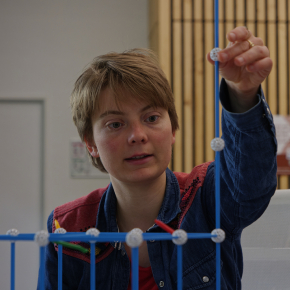
Mathematics – a particularly French passion?
On December 8th at the French Senate, the main findings from the citizen consultation on mathematics launched in the spring were presented. French people may have an ambivalent attitude towards the subject and a stark perception of access inequalities but here their massive participation demonstrated their love of mathematics. It is now up to politicians to take up the issue in the light of these findings.
"In maths, either you were good or you were dreadful. It was one or the other". This was one of the findings from the citizen consultation on French people's relationship with mathematics organised last spring by CNRS Mathematics, one of the CNRS's ten Institutes. This consultation followed on from 2022's Assises of Mathematics conference which highlighted the crucial contribution the discipline makes to the economy. In the same vein as this national conference, the consultation that began in March 2025 generated an exceptional response from French citizens, with over 33,000 survey respondents providing insight into their relationships with mathematics.
This level of interest testifies to the intimate links French people have with the discipline. They associate mathematics with memories from their schooldays and family lives, whether good or bad, but this intimate relationship is also coupled with strongly perceived discrimination. 76% of the survey respondents acknowledged that inequalities exist in the form of barriers to entry into the discipline, whether gender-based (the stereotype that men are better than women), social (the working classes feel left out) or territorial (reduced access for rural populations to extracurricular activities and scientific culture). And yet, French citizens are not giving in to disaffection with mathematics and, on the contrary, consider maths – a discipline in which France is an internationally recognised centre of scientific excellence – to be of national importance and also useful in everyday life, whether for assembling furniture or filing tax returns.
The survey's findings brought up a question for CNRS Mathematics, namely how to make mathematics accessible to everyone at all stages of life? Over three consecutive weekends in June and July of this year, this issue was the subject of lengthy discussions for citizen panels made up of 46 people selected at random from respondents to the consultation. These were divided into two groups with the first consisting of women alone while the other was mixed and made up of people from working-class backgrounds, rural areas or disadvantaged neighbourhoods. The panels produced around 60 recommendations for public decision-makers and four panel members presented these to the French Senate during a feedback session on December 8th 2025.
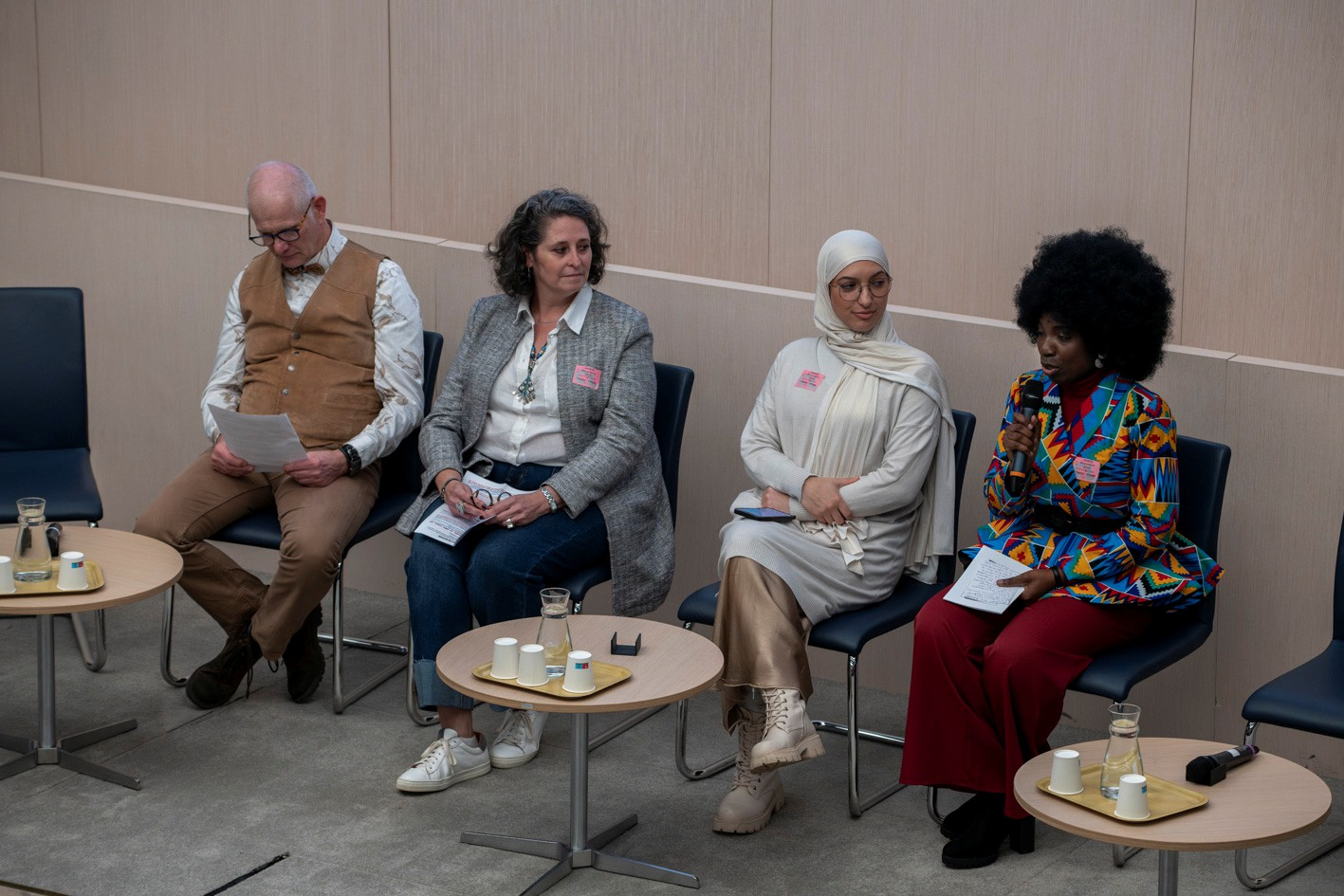
Nuptia Nkounkou, a resident of the Seine-Saint-Denis region near Paris and member of one of the panels, described the general goal underpinning these recommendations as being to "enable everyone to acquire the basic mathematical skills required to understand the world". Another aim is to put an end to the situation pinpointed regretfully by Patrice Sarpi, a panellist and cabinetmaker from the Marseille area, whereby "mathematics suffers from its reputation as a subject that's hard for ordinary people to access which turns it into a tool for selection rather than an enriching subject". To do so, some of the respondents' proposals emphasise the importance of training and learning mathematics to deconstruct the 'innate' character that people associate with mathematics. These include specific training for primary school teachers, classroom-based scientific outreach activities, a platform listing educational resources and also maths lessons for the many adults who regret their lack of enthusiasm for the subject during their schooldays. As well as this formal learning, the panellists were in favour of instilling a taste for mathematics in our daily lives, particularly through informal games for families to play. Anne Crozon, a job seeker who lives in the country near Rennes, called for the promotion of "a general culture of mathematics by showing that it's everywhere in our everyday lives" to "guarantee equal opportunities aimed at excellence in France but not at the expense of people who are less comfortable with mathematics".
CNRS Mathematics now intends to develop an action plan based on all these proposals in response to the aspirations of French citizens. This future roadmap will have three pillars which Christophe Besse, the Institute's director, detailed to the Senate as "demystifying mathematics", "improving inclusion" and "developing a true mathematical culture".
