Mission Neptune: an overview of a scientific coalition focused on the high seas and the seabed
A year after the third United Nations Ocean Conference (UNOC-3) comes the launch of a new scientific programme on the high seas and the seabed. Mission Neptune will explore these little-known ecosystems to provide scientific insight for debates about the international governance of the ocean.
Key action takeaways
One year after UNOC-3, ocean governance is continuing to take shape, notably by drawing on scientists’ recommendations.
Mission Neptune is a new research programme that will explore the high seas and the seabed through public-private partnerships.
The aim is to fill the knowledge gap and inform international negotiations.
When Donald Trump announced his intention to withdraw from ocean exploration to concentrate on manned flights to Mars, Olivier Poivre d’Arvor, France's Ambassador for the Poles and Maritime issues, replied that “we won’t be going to Mars, but to Neptune.”
Even today, the high seas and the seabed are still less explored than our moon or the Red Planet. This is one of the reasons why a major scientific programme, 'Mission Neptune', aimed at finding out more about these little-known ecosystems was announced in June 2025 at the 3rd United Nations Ocean Conference (UNOC-3).
This new consortium will be launched in Paris on June 8th 2026 to mark the United Nations World Oceans Day at the Neptune Forum, a high-level international gathering for scientists, public decision-makers, economic stakeholders, international organisations and representatives from civil society.
With the seabed now becoming a new strategic frontier, a new question has arisen, namely who will generate the knowledge required to establish the rules of international governance in the future? A year on from UNOC-3, the Neptune Mission could provide an attempt at an answer to this question.
Structuring international ocean governance
Although the ocean covers 70% of the planet’s surface, it has long represented a ‘blind spot’ in international negotiations. Since the establishment in 1982 of the United Nations Convention on the Law of the Sea (UNCLOS), ocean governance has continued to take shape, notably thanks in part to French diplomatic impetus. Research makes a vital contribution to this process by informing debates.
June 2025: the 3rd United Nations Ocean Conference (UNOC-3), jointly organised by France and Costa Rica, takes place in Nice.
June 2025: the European Commission announces the European Ocean Pact. This strategy serves as a framework for all European Union policies on the ocean.
September 2025: the Biodiversity Beyond National Jurisdiction (BBNJ) Act on the protection of the high seas achieves the 60 ratifications required for it to come into force.
Late 2026: the European Commission prepares the European Ocean Act, a legislative initiative aimed at modernising maritime spatial planning which builds on the Pact.
January 2027: the signatories of the BBNJ agreement organise the first ‘BBNJ COP’ at the UN's New York headquarters.
2028: the 4th United Nations Ocean Conference (UNOC-4) will be jointly hosted by South Korea and Chile.
Exploring the seabed and informing public policy-making
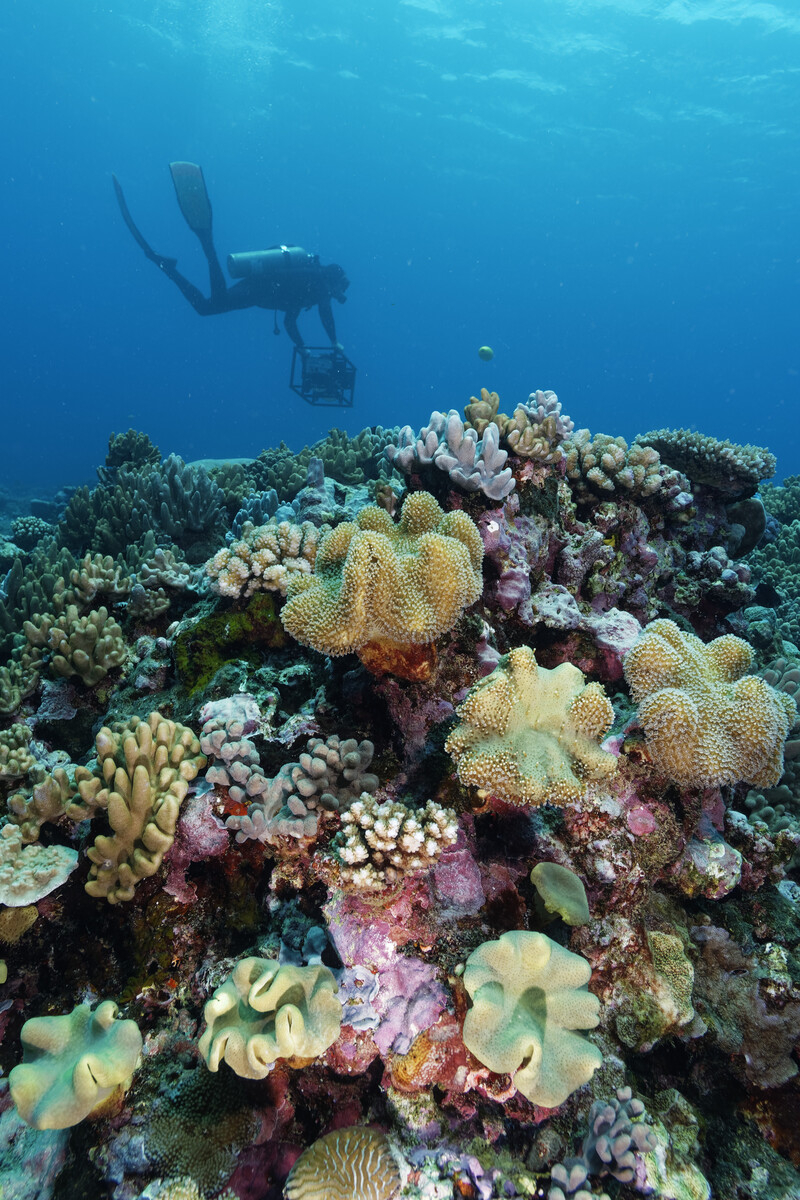
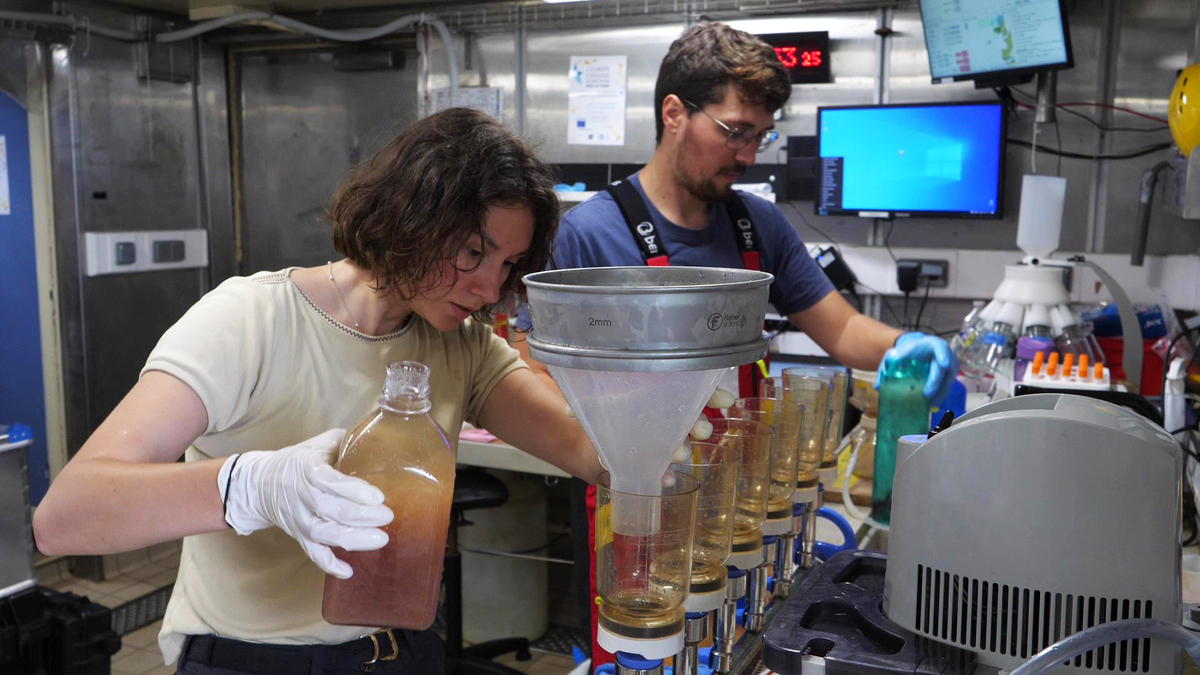
The Neptune Mission is supported by an international scientific advisory board and structured around key research priorities. The consortium’s oceanographic expertise is contributing to a better understanding of the high seas and the seabed - from habitat mapping to the study of marine carbon sinks, from the polar oceans to seamounts.
The Mission aims to fill the knowledge gap and provide scientific input for the public decision-making process working towards the implementation of new international treaties. In this way, the Neptune Mission is fully committed to supporting all of the pillars of the BBNJ agreement, such as marine protected areas, marine genetic resources or environmental impact assessments for new offshore activities.

Research as a tool for highlighting vulnerabilities
The world’s oceans may seem to some to be a vast body of water that never changes but they are actually now faced with growing sources of vulnerability. The acceleration of climate change and the increase in marine heatwaves, the erosion of biodiversity and the impact of illegal fishing, plastic pollution and the deterioration of ecosystems are provoking vulnerabilities that human societies will need to face up to.
There is also intense competition over the ocean and its resources but, unlike territorial waters, the high seas and the seabed are still mostly unprotected by international treaties which, in turn, is driving uncontrolled exploitation. Polymetallic nodules are of particular concern. These nodules lie several thousand metres below the surface and could be exploited for the strategic supply of critical metals. This situation is therefore bringing up questions of sovereignty for different countries in the current context of ever-intensifying competition for terrestrial resources.
The high seas and the seabed are thus becoming a new frontier, so generating knowledge to develop international governance rules is becoming a major issue. The research to be carried out by the Neptune Mission can thus feed into debates on the regulation of practices of this kind.
The CNRS’s strength - a multidisciplinary approach to the ocean
The CNRS is one of the few organisations in the world that works across the full spectrum of disciplines linked to the ocean - modelling, observation, physics, mathematics, chemistry, biology, ecology, and even the humanities and social sciences.
This unique strength is of course a major asset in the research field but this is also the case at an institutional level. Through the CNRS's Ocean Task Force, the organisation is transforming its scientific output into tools for policy-making, for example by contributing to consultations for the European Commission’s upcoming European Ocean Act.
The CNRS will draw on its multidisciplinary approach in the framework of the Neptune Mission's scientific advisory board to mobilise the international research community. The organisation will also manage the consortium’s scientific direction to make sure the challenges addressed correspond to knowledge-based issues that are of benefit for all.
Science in support of multilateralism
The Neptune Mission's derives from the great diversity of its members. Alongside public research organisations like the CNRS, it relies on the participation of philanthropic foundations like Tara Ocean, united under the banner of the Pink Flamingo consortium. These are often very well equipped and dedicated to generating knowledge, particularly by hosting scientists during their expeditions.
As well as private stakeholders, the initiative involves research organisations from many participating countries, including Europe, China, India, Chile and Pacific island nations. They also have strong political backing from the United Nations, UNESCO and France's President Emmanuel Macron. In this way, the Neptune Mission serves as an illustration of how science supports international negotiations and of multilateralism.