

“Science can help save traditions”
In French Guiana, the CNRS’s Oyapock Human-Environment Observatory is multiplying its joint projects with Amerindian communities - a way of raising the profile of Amerindian cultures, whose knowledge and traditions are becoming increasingly vulnerable.
Key action takeaways
Knowledge that is at risk can be preserved by research with the active participation of learned members of the communities involved.
Consultative approaches that promote the preservation of traditional practices can be led by researchers.
Artistic works that transmit traditional cultures can be jointly created by artists and specialist researchers.
Scientific projects can train and employ local people in participatory or jointly created research projects.
How can science benefit the peoples it studies? This is the guiding question underpinning the work of the CNRS’s Oyapock Human-Environment Observatory (OHM) in French Guiana. Nearly 15,000 Amerindians from six distinct groups live in this French overseas territory, over 90% of which is covered by the Amazon rainforest. “They are survivors, they came close to disappearing. One of these peoples, the Teko, now number just 600,” warns Damien Davy, an anthropologist and the director of the Oyapock OHM1 .
- 1An OHM is a research structure designed to study highly anthropised, artificialised and complex ecosystems. Humans are considered to interact directly with the Geosphere and the Biosphere, thus forming unique socio-ecosystems.
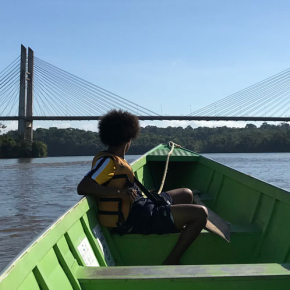
This CNRS research initiative was set up in 2008 to help advance anthropological and sociological understanding of the inhabitants on both banks of the Oyapock River. Another objective is to find out more about the dynamics of the socio-ecosystems in this territory that is shared between French Guiana and Brazil. “We are trying to help preserve and pass on the culture. As far as possible, the OHM’s work is carried out with and for the local communities,” explains Damien Davy. However, actually meeting the inhabitants can prove logistical challenging. For example, Mr Davy has travelled to the commune of Camopi from his office in Cayenne for several projects which requires a three-hour drive and then a four-hour boat journey on the Oyapock River or an hour by plane.
Bringing traditional tales back to life
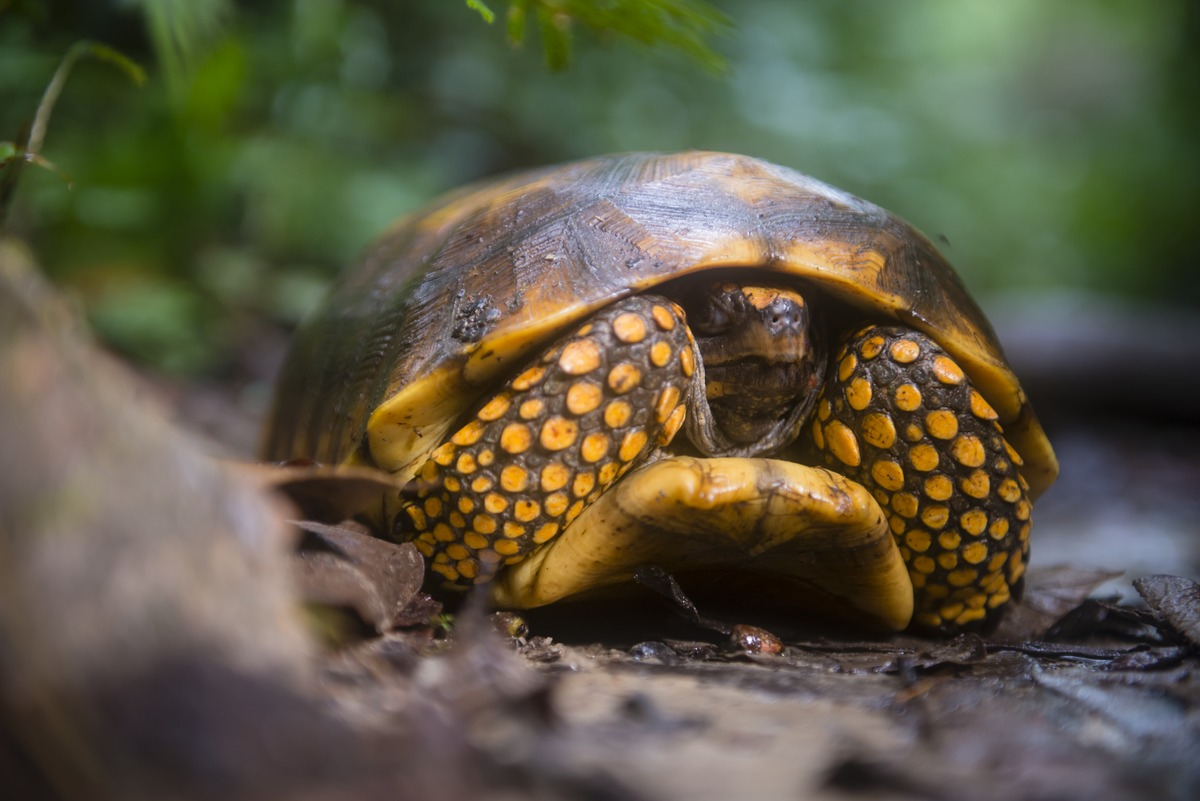
Jammes Panapuy lives in Camopi, near the Brazilian border. Mr Panapuy is a representative of the Teko people and head of the Oyapock delegation to the French Guiana Amazonian Park. He has been a friend of Damien’s for over 20 years and now they are writing a collection of myths and stories together. These tales were whispered into Jammes’s ears by his parents until he fell asleep or recounted by other elders. “The characters include turtles, jaguars, anacondas… Our tales explain the tradition, lived experiences and mindset of Teko people who feel they're a part of the nature that surrounds them,” explains Jammes. “But today, this oral tradition is being lost,” he adds, admitting that he himself has yet to recount them to his own children.
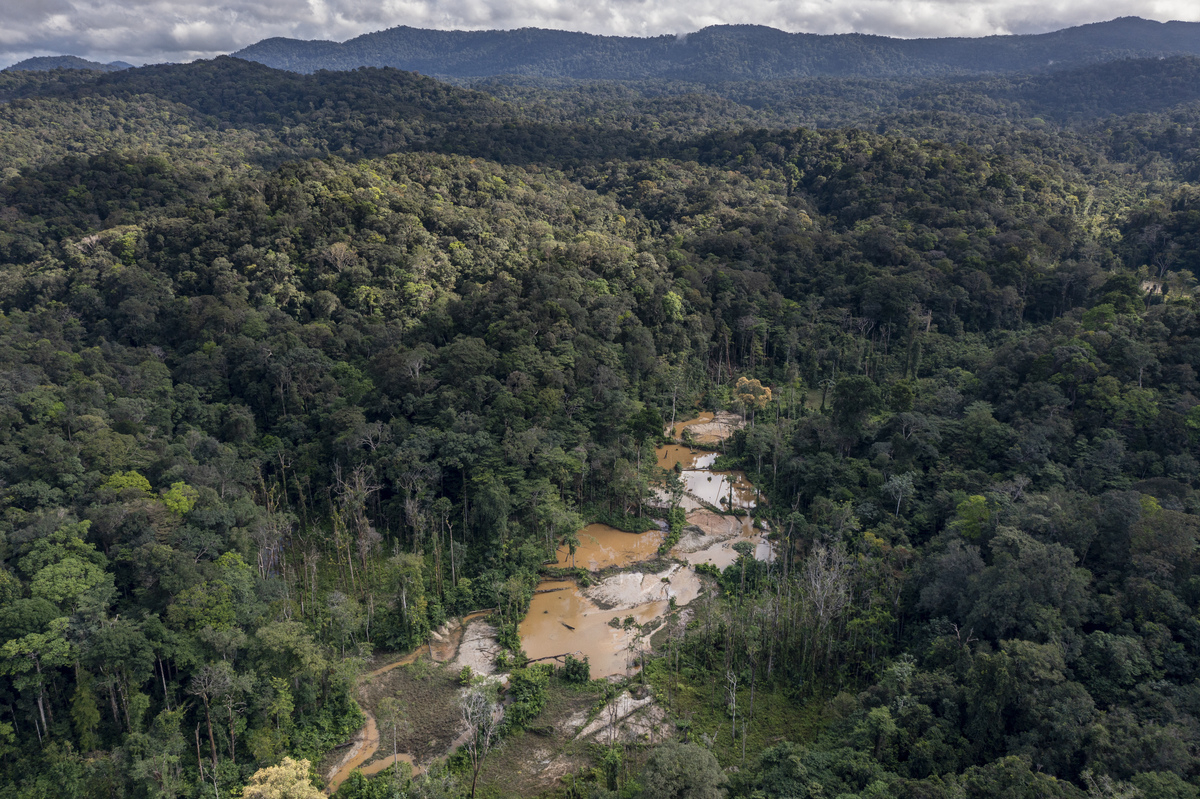
Amerindian and Bushinengue communities are the descendants of rebellious slaves and number nearly 100,000 in French Guiana. These people are faced with precarious circumstances which often tends to mean cultural transmission is not an immediate priority. Their difficulties involve illegal gold panning (which threatens their health and environment), difficulties in accessing land and alarmingly high rates of suicide and alcoholism among young people. However this representative of the Teko people considers transmission essential to preserve their culture. “We must give every young person the chance to succeed in both worlds - the Western world, through the initial framework of the French Republic’s school system, and our own traditional world.” He considers traditional skills like fishing, basket weaving1 , and beadwork to be a means of subsistence for his people, particularly for the young “who've lost their bearings and are now struggling at school.”
- 1 The art of weaving plant fibres.
Short films in the Wayãpi language
“Science can help save traditions,” claims Jammes Panapuy who has taken part in or observed numerous projects of this kind. A community hut without walls and consisting of a simple roof of palm leaves has been built in his home commune, Camopi, to provide a place for gathering, rest and hosting storytellers. CNRS researchers have supported the transmission of traditional knowledge on the construction methods of huts of this kind.
The CNRS also collaborates on projects that contribute to the dissemination of knowledge. The Ecology, Evolution, Interactions of Amazonian Systems Laboratory (LEEISA1 ), which Damien Davy is affiliated to, has produced two short films in the Wayãpi language, created by artists and scientists working together. The first film is on whistled speech, a traditional hunting technique while the second showcases a Wayãpi tale entitled 'The Anaconda and the Colour of Birds'. Damien Davy stresses the importance of giving a voice to the people who share their stories. “It is their own talent and knowledge. For too long, indigenous peoples have been viewed as mere subjects of study, without recognised political representation. And yet they're active participants in history.”
- 1CNRS / University of French Guiana / Ifremer
A bilingual Wayãpi/French short film about whistled speech, a hunting skill
Audiodescription
Cultural practices finally mapped
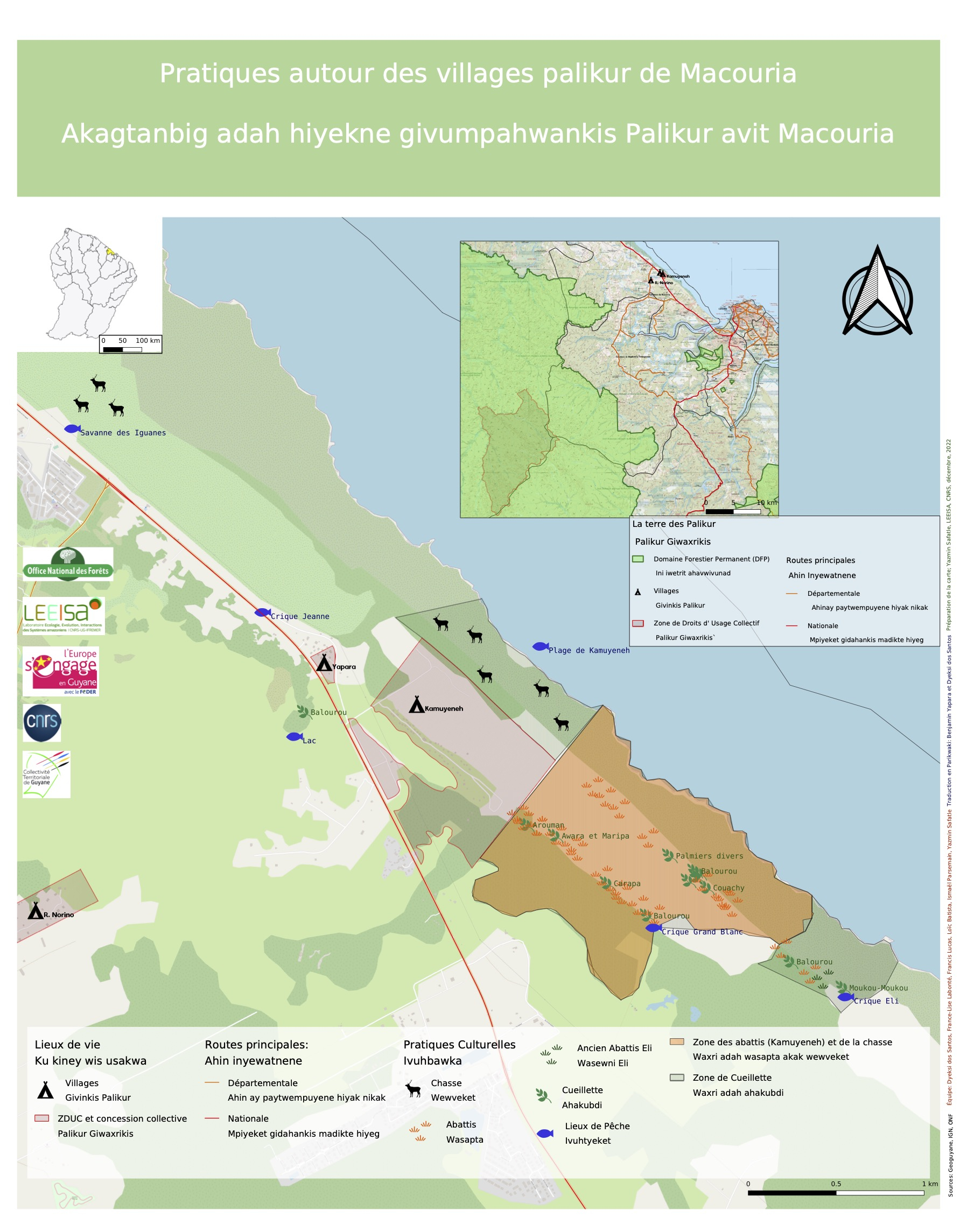
The scientific approach also facilitates consultation between local authorities and residents which is also essential for the preservation of certain traditional practices. The CNRS supported the French National Forests Office (ONF) in the joint development of maps with members of the Palikur communities in the towns of Macouria and Roura. In a real first for the ONF, these maps are in both French and Parikwaki, the language of the Palikur, and also show the locations of the Palikur’s cultural practices like their gathering, hunting fishing and 'slash-and-burn' agricultural areas.
Four Palikur facilitators were trained and paid to use mapping software and GPS tools and to lead consultation workshops under the supervision of a project officer from the CNRS, who ensured the scientific rigour of the process, and a technical assistant from the ONF. This participatory mapping work was carried out in 2022 in the framework of the ‘Palikur Giwaxrikis’ (The Land of the Palikur) project, funded by the European Regional Development Fund (ERDF). This project's objective was to work towards the sustainable management of forest areas by formalising a consultation procedure to promote dialogue and knowledge-sharing. The ONF drew up a charter of commitment following these consultations which also enabled specific needs to be identified. These include the installation of information boards setting out the rules to be observed in areas where Indigenous communities hold usufruct rights.
Previously, the CNRS had carried out a mapping project of the Oyapock River in collaboration with the Teko and Wayãpi communities and the Guiana Amazonian Park. This project produced trilingual maps (French, Teko, Wayãpi) featuring all the place names in the area, which bear witness to these peoples' history. “These maps are now distributed across all the branches of the Amazonian Park which are used by both locals and tourists. I think we could include explanations about our culture in these maps in the future,” explains Jammes Panapuy enthusiastically. It is also a way of raising the profile of these traditional communities who “have carried on living their indigenous way of life”, as Damien Davy observes.
Finding the right balance between protection and knowledge-sharing
Of course scientists have to respect any boundaries set by the Amerindian and Bushinengué communities while taking these tangible steps forward. The Teko people of Camopi are currently refusing any new scientific collaboration projects until the issue of illegal gold panning is resolved. This has been particularly traumatising for the community because its former traditional chief, Guy Barcarel, a former dugout canoeist with the Legion, died during an operation to combat illegal gold panning of this sort. The community see this refusal of collaboration as a way of supporting their political demands.
There is also mistrust about research into their knowledge of plants. “There could be a sense of dispossession of their knowledge and a fear of a kind of privatisation of nature, for example, through the introduction of patents on biomolecules for medicines,” explains Damien Davy. The Amerindian and Bushinengué peoples have a right to veto under access and benefit-sharing (ABS) regulations. These regulations aim for the fair and equitable sharing of benefits from the use of biodiversity, which is a direct implementation of the Nagoya Protocol, an international agreement signed in 2010. This means that French research operates under an 'authorisation regime' whenever natural genetic resources are involved that are associated with the knowledge of communities which traditionally rely on the forest for their livelihoods.
Traditional knowledge “can help preserve biodiversity”
However, this did not prevent the Wayãpi people from contributing to a research project by sharing some of their knowledge. In 2022, the LEEISA published a study on the impact of human activity - and more particularly illegal mining - on the fish of the Oyapock,. Wayãpi people accompanied the researchers by canoe to show them how various human activities affect the study areas and point out the presence of the fish species they are familiar with. For their part, the researchers used the non-invasive environmental DNA technique to analyse these fish communities in greater detail. The scientists and the Wayãpi people had the same shared objective - to gather useful information to develop the right measures for protecting biodiversity.
“The knowledge of the local population can help preserve biodiversity. In this era of intense focus on productivity coupled with the widespread destruction of the environment, studying the knowledge and cultures of traditional peoples actually forces us to be humble. Their ways of living in the world around them are based on balance and, for example, hunting rules that have to be respected because they believe breaking them would lead to the appearance of diseases,” continues the anthropologist. Along with his colleagues at the LEEISA in French Guiana, he is continuing his research into Amerindian cultures by engaging with the communities much as possible. “Above all, it's a human adventure,” he concludes.
'Amerindiens', 'peuples autochtones'… which term should be used in French?
The French government does not use the term ‘indigenous people’ to refer to the descendants of the peoples who inhabited French Guiana before French colonisation. This is set out in the Constitution, which affirms the unity of the French people. France prefers the term ‘Amerindian’ although this term remains a subject of debate in academic circles as it homogenises very different peoples across the Americas and echoes Christopher Columbus’s error with the term ‘India’. The United Nations (UN) and Guyana’s neighbour, Brazil, use the term ‘indigenous’ but it is generally recommended to refer to the various peoples individually by their own self-designations - Teko, Wayãpi, Kali’na, etc.