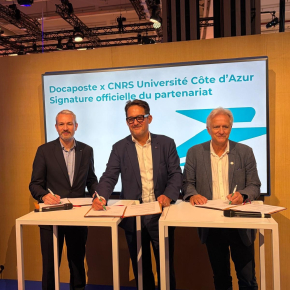
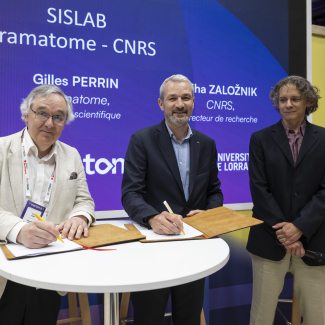
The CNRS, Université Côte d’Azur and Docaposte launch a joint laboratory dedicated to digital trust
Digital
Innovation
|
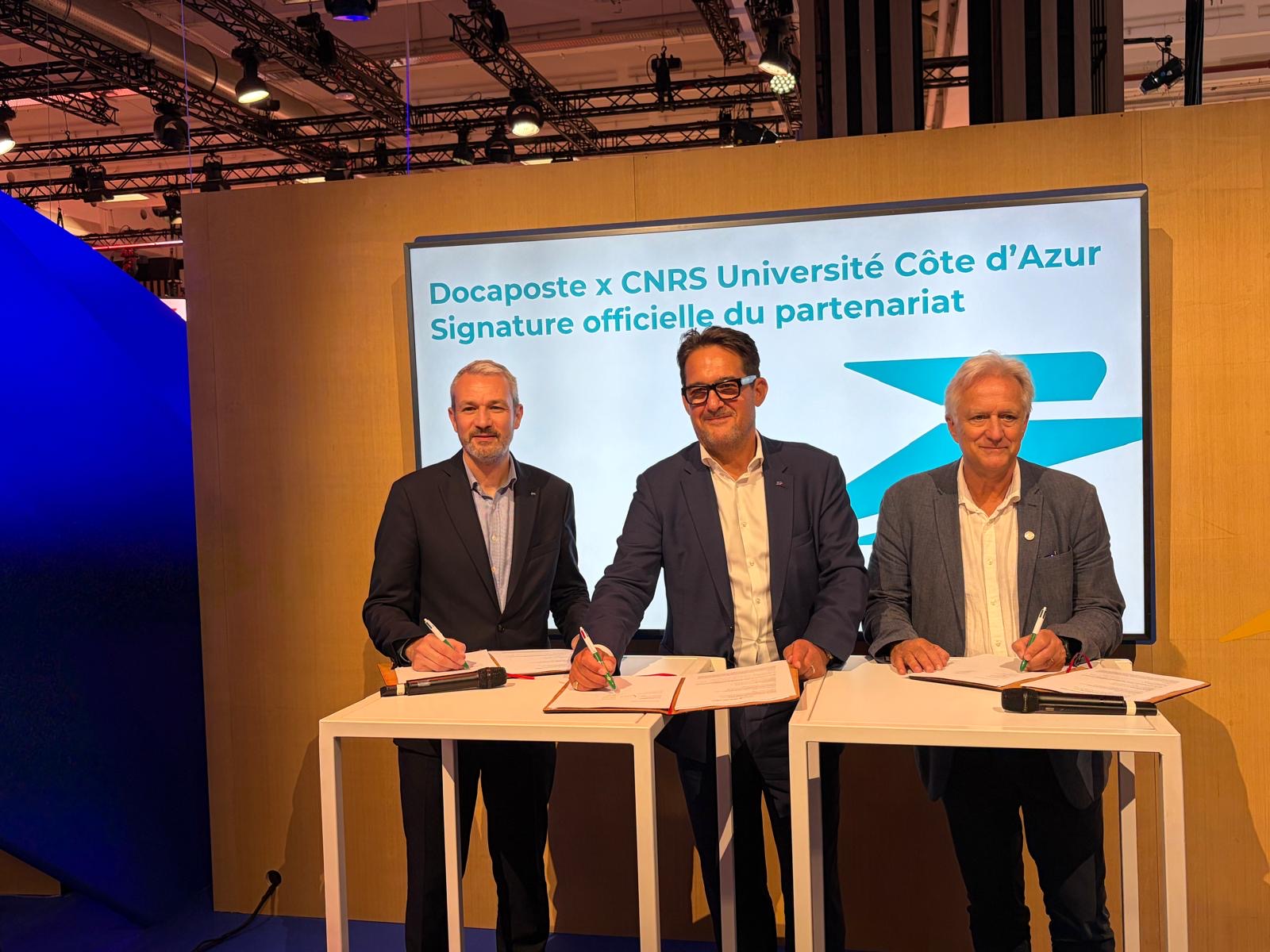
During the “Defense, Cybersecurity & AI” day held on June 18 at its booth at VivaTech, CNRS announced, together with Université Côte d’Azur and Docaposte, the digital subsidiary of La Poste Group, the creation of a joint laboratory dedicated to the development of innovative solutions for digital trust. This first collaboration is driven by a shared ambition to build reliable and trustworthy software applications, a critical challenge in an era marked by growing cyber threats and technological monopolies. The new laboratory draws on the expertise of CNRS and Université Côte d’Azur in information science and technology through the Computer Science, Signals and Systems Laboratory of Sophia Antipolis (I3S), as well as on Docaposte’s recognized know-how in digital trust services.
The CNRS, Université Côte d’Azur and Docaposte are joining forces to develop technologies that enhance digital security and reliability. Their shared objective is to verify the trustworthiness of digital technologies while promoting the inclusive, ethical and responsible use of data. As part of LINCS – the Computer Science Laboratory for Sovereign Trusted Digital Technologies – research teams from the Computer Science, Signals and Systems Laboratory of Sophia Antipolis (CNRS/Université Côte d’Azur), a leading research center in computer science, and Docaposte will work together over the next four years to establish a comprehensive digital trust framework built around four research areas:
- Securing end users and their data through trusted execution environments;
- Leveraging digital twins to test and validate trustworthiness;
- Developing explainable artificial intelligence techniques;
- Enhancing automated argument generation to support decision-making processes.
These research areas will, for example, enable the simulation of cyberattack scenarios in controlled environments and make AI-driven decisions more transparent and auditable.
The joint laboratory will also contribute to the development of innovative projects within Docaposte.
Aligned with the objectives of the France 2030 strategy, Docaposte is fully committed to advancing national efforts aimed at strengthening digital trust and technological sovereignty.
“Through this joint laboratory, CNRS, Université Côte d’Azur and Docaposte demonstrate that innovation is first and foremost driven by collaboration. By combining our expertise in computer science with Docaposte’s deep understanding of its customers’ needs, we will rethink digital trust, a critical issue for both businesses and citizens. This joint laboratory illustrates how ambitious and well-structured collaborative research can serve as a powerful lever for addressing tomorrow’s technological challenges,” said Mehdi Gmar, Chief Innovation Officer of CNRS.
“For Docaposte, trust lies at the heart of the development of digital services and uses. By contributing to the creation of this laboratory alongside CNRS and Université Côte d’Azur, Docaposte aims to strengthen the connection between scientific advances and real-world applications, fostering the emergence of robust and innovative solutions that enhance the security of digital exchanges and the protection of data for organizations and citizens alike,” said Frédéric Dufaux, Deputy Managing Officer of Docaposte.
“The creation of this joint laboratory perfectly illustrates Université Côte d’Azur’s ability to bring together leading academic and industrial stakeholders around strategic challenges facing our society. At a time when data control and security have become essential, we reaffirm our commitment to European digital sovereignty founded on scientific excellence, innovation and responsibility. This partnership with CNRS and Docaposte reflects our determination to transform research into concrete solutions that strengthen digital trust for citizens, businesses and public institutions,” said Jeanick Brisswalter, President of Université Côte d’Azur.
Contact
Delphine Sanfilippo
Attachée de presse Université Côte d’Azur