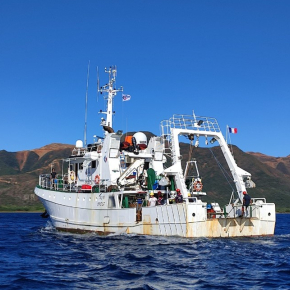

Intensive nickel mining has transformed the microbial biodiversity of the Thio Lagoon in New Caledonia
Environment
A study carried out by scientists from Ifremer, IRD, universities of Western Brittany (UBO) and Bordeaux, CNRS, and University of Tartu (Estonia) reveals the impact of nickel mining on the coastal ecosystems of New Caledonia. Published in the journal Communications Earth & Environment, this research shows that starting from the 1950s, the mechanization of mining operations led to a sharp increase in sediment inputs into the Thio Lagoon and a disruption of microbial communities that persists to this day. While environmental measures implemented since the 1970s have reduced sediment inputs directly linked to nickel extraction in this lagoon, significant soil erosion across the watershed continues to impact the Thio Lagoon ecosystem today.
Bibliography
Meyneng, M., Lemonnier, H., Ansquer, D. et al. Coastal ecosystem degradation driven by decades of unregulated terrestrial mining. Commun Earth Environ 7, 494 (2026). https://doi.org/10.1038/s43247-026-03677-8