
Radioactive waste dumped in the Atlantic: a scientific mission to document its interactions with ecosystems
Earth
Between 1950 and 1990, more than 200,000 barrels filled with radioactive waste were dumped in the depths of the North-East Atlantic. Following an initial mission carried out between 15 June and 11 July 2025 to map the area where the barrels were dumped, the Nodssum project, led by the CNRS, set sail again at the end of May 2026. The aim was to explore the areas of interest identified during the first campaign.
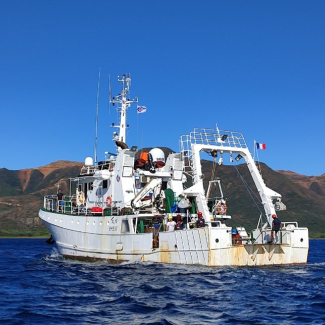
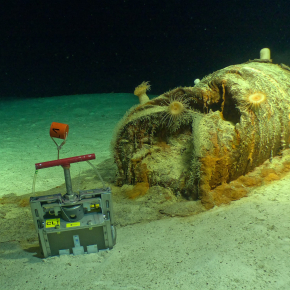
Led by the CNRS, in collaboration with a team from Ifremer, the ASNR and several national and international partners1, this campaign aims to gain a better understanding of the interactions between the 200,000 drums of radioactive waste that have been submerged and deep-sea ecosystems. During this second mission, which took place from 27 May to 28 June 2026, around thirty scientists were on board the Pourquoi Pas?. The manned submersible Nautile, part of the French Oceanographic Fleet, carried out 20 dives to depths of over 4,700 metres, enabling direct observation of several barrels and their immediate surroundings.
The observations made using the Nautile and other instruments deployed from the vessel, together with the samples collected, provide new data on this submerged waste. In particular, scientists were able to document the advanced state of deterioration of several barrels, observe that some of them had leaked their contents, and identify the various materials used to encapsulate the waste (resin, bitumen or cement).
Measurements taken on site confirm the presence of radionuclides characteristic of this waste, at activity levels higher than those expected in this area. Laboratory analyses will enable these radionuclides to be precisely quantified and may potentially identify others. In any case, the measurements taken during the mission indicate activity levels that remain low, allowing the samples to be handled without major radiation protection constraints. At the same time, samples of water, sediments and living organisms were collected in order to study the mechanisms of dispersion and transfer of radioactivity in the environment. The teams also documented and mapped the biodiversity present on the barrels, in their immediate vicinity and in the surrounding habitats, whilst gathering new observations that may help to identify the origin of certain barrels.
Analysis of the samples collected and the images captured will continue on land, in the laboratory, over the coming months. The aim is to gain a better understanding of the mechanisms governing the transfer and transport of radionuclides in the deep ocean, as well as their interactions with abyssal ecosystems.

- 1
Led by the CNRS, this scientific mission involves several national and international partners: the University of Clermont-Ferrand, the École Normale Supérieure, the University of Grenoble, ASNR, IFREMER, the University of Strasbourg, the University of Montpellier, the University of Nantes, the University of Western Brittany, IRD, IMT Atlantique, SciencesPo, the Béquerel Network in France, University of Bergen (Norway), Johann Heinrich von Thünen Institute (Germany), Norwegian Radiation and Nuclear Safety Authority (Norway), Centro Nacional de Aceleradores (Spain), University of Girona (Spain).