Well cared for and well fed, penguins live longer but age faster
Paris,
Life
Placed in a sedentary lifestyle with daily and abundant access to food, king penguins grow quickly but age at an accelerated rate, according to the findings of an international research team co-led by a CNRS¹ researcher. This study will be available in the journal Nature Communications from March 25, 2026.
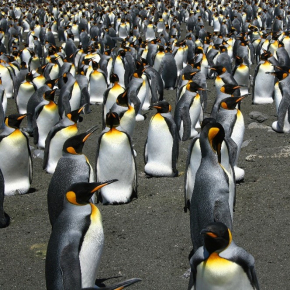
With a lifespan that can exceed 40 years, king penguins are a relevant model for understanding ageing mechanisms on a timescale comparable to that of humans.
The research group replicated the conditions of Western societies by providing several penguins with a protected and comfortable environment at Zurich Zoo (Switzerland) and Loro Parque (Tenerife), and concluded that a 15-year-old zoo penguin has the body of a 20-year-old wild penguin.
The result: zoo life accelerates the ageing process in penguins. Like humans, these animals live longer in modern environments equipped with advanced healthcare systems. However, this does not necessarily translate into better health at older ages.
Using tools originally developed for humans, the research team is now working to offer a more active lifestyle to zoo penguins: less food and more exercise. The team also aims to raise public awareness of the importance of a moderate lifestyle in an increasingly abundant world.
Note:
1 – Working at the Centre for Functional and Evolutionary Ecology (CNRS/EPHE-PSL/IRD/Université de Montpellier) since January 2025, and previously at the Hubert Curien Multidisciplinary Institute (CNRS/Université de Strasbourg). This work also brings together scientists from Finland, Switzerland, Spain, Monaco, Germany, Norway and Italy.
Bibliography
Lifestyle change accelerates epigenetic ageing in King penguins. Cristofari R., Davis L., Bardon G., Fernandes F., Figueroa M.E., Franzenburg S., Gauthier-Clerc M., Grande F., Heidrich R., Hukkanen M., Le Maho Y., Ollikainen M., Paciello E., Rampal P., Stenseth N.C., Trucchi E., Zahn S., *Le Bohec C. & *Meyer B.S. Nature Communications, March 2026.
DOI : https://doi.org/10.1038/s41467-026-70527-8
Contact
Céline Le Bohec
Directrice de recherche CNRS - Centre d'écologie fonctionnelle et évolutive